

Social Security, your savings, and the gap between what comes in and what you need.
This is an educational walkthrough using a fictional family. It is not financial advice, and the right answers for you depend on facts a lesson cannot know.
Watch this lesson (4 minutes) Opens YouTube in a new tab.
1.Who pays me when I stop working?
For forty years someone has handed you a paycheck. The day you stop working, that ends. So who pays you after that? You do. This lesson shows where the money comes from. As always: this is an educational walkthrough using a fictional family. It isn’t financial advice.
2.Three places the money comes from
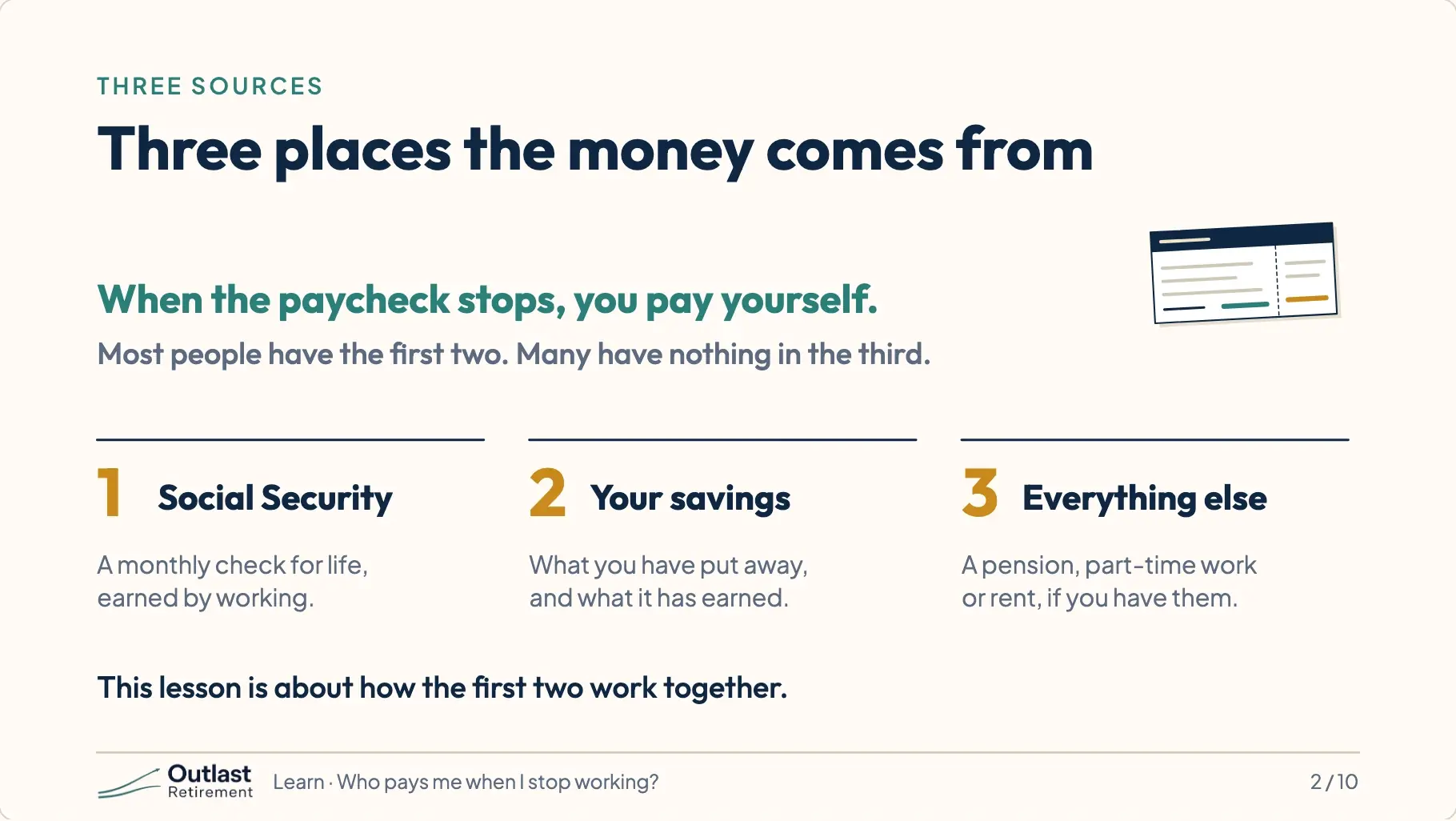
Retirement money comes from three places. Social Security. Your own savings. And everything else: a pension if you have one, or part-time work, or rent from a property. Most people have the first two. Many have nothing in the third box, and that is normal.
3.Social Security
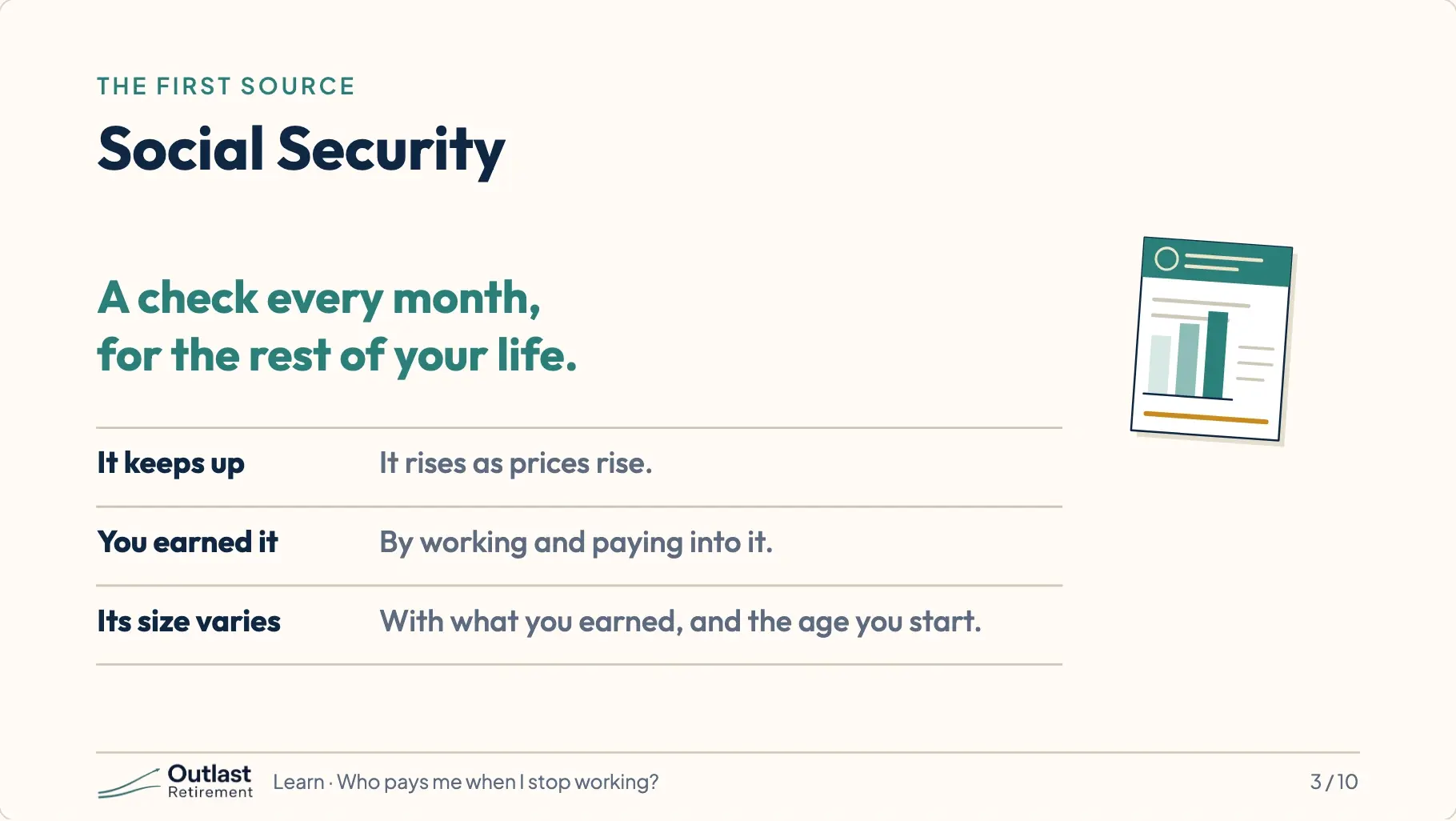
Social Security is a check every month for the rest of your life. It goes up as prices go up. You earned it by working and paying into it. How big it is depends on how much you earned, and on the age you start taking it.
4.Their Social Security checks
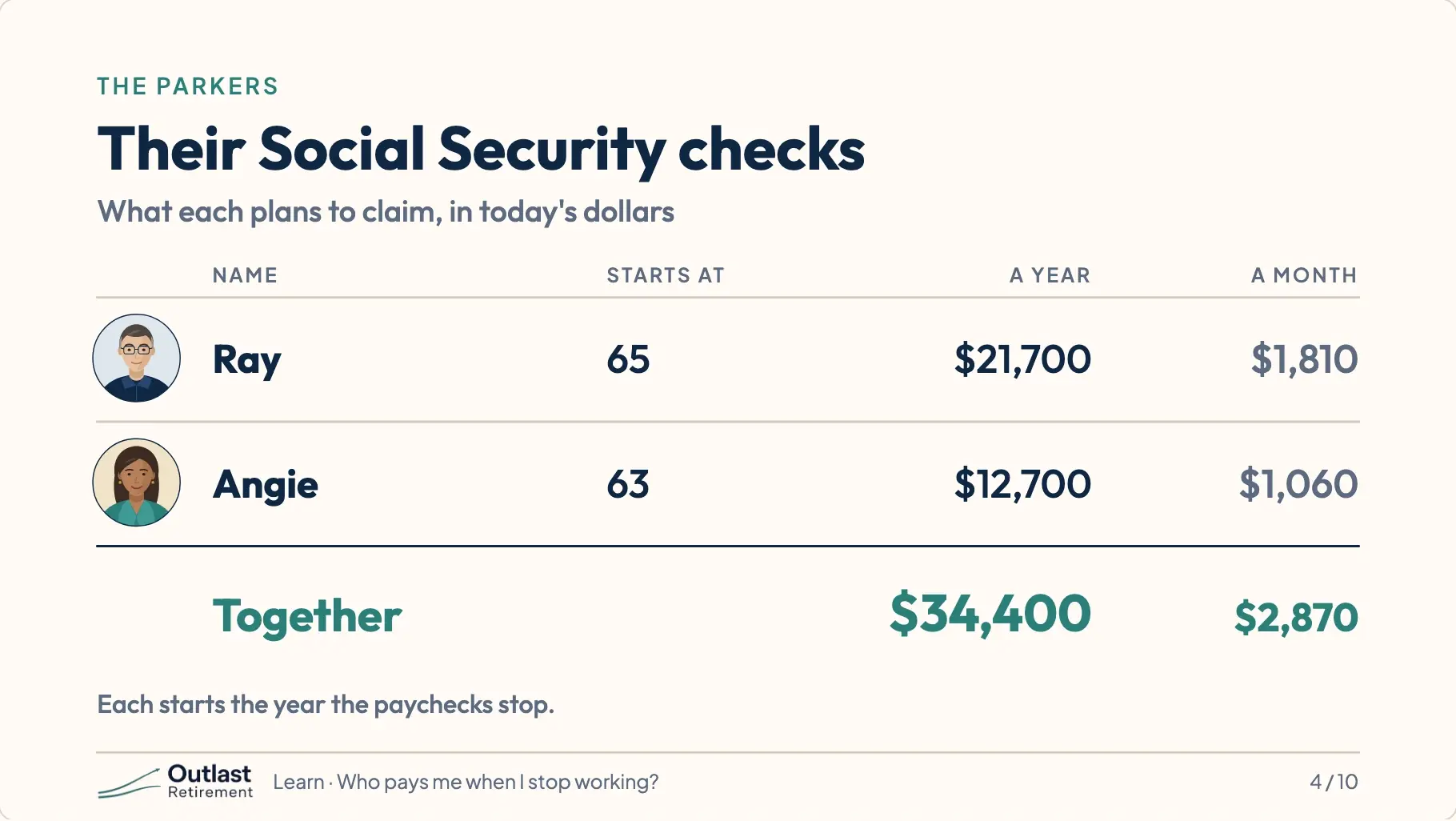
Ray and Angie plan to start their checks the year they stop working. Together that comes to about thirty-four thousand four hundred dollars a year. That is about twenty-nine hundred dollars a month.
5.What they need in the first year
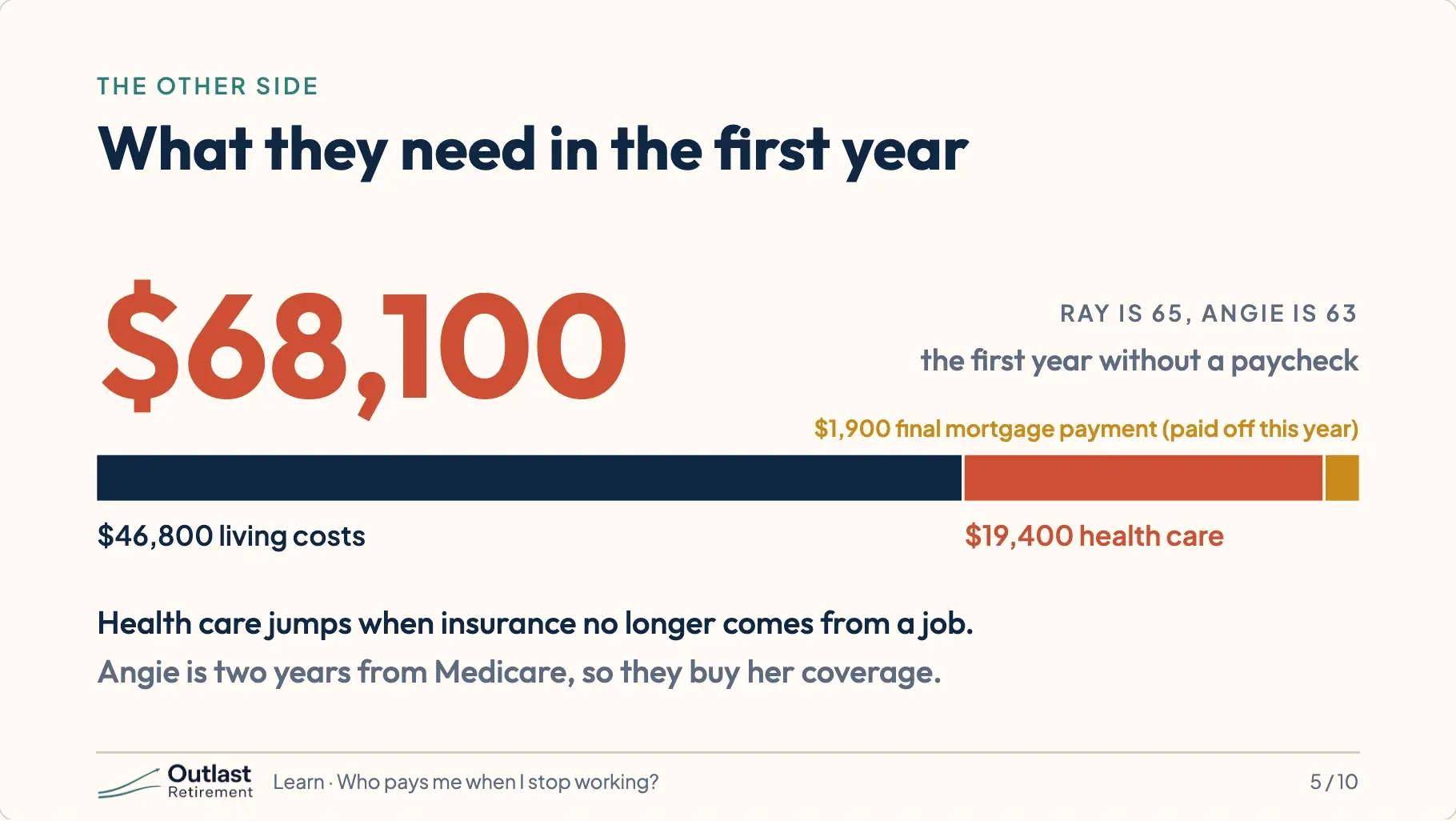
Now the other side. In their first year of retirement, Ray and Angie need about sixty-eight thousand dollars. That is their living costs, plus health insurance, which gets expensive when it no longer comes from a job. We look closely at costs in the next lesson.
6.The gap
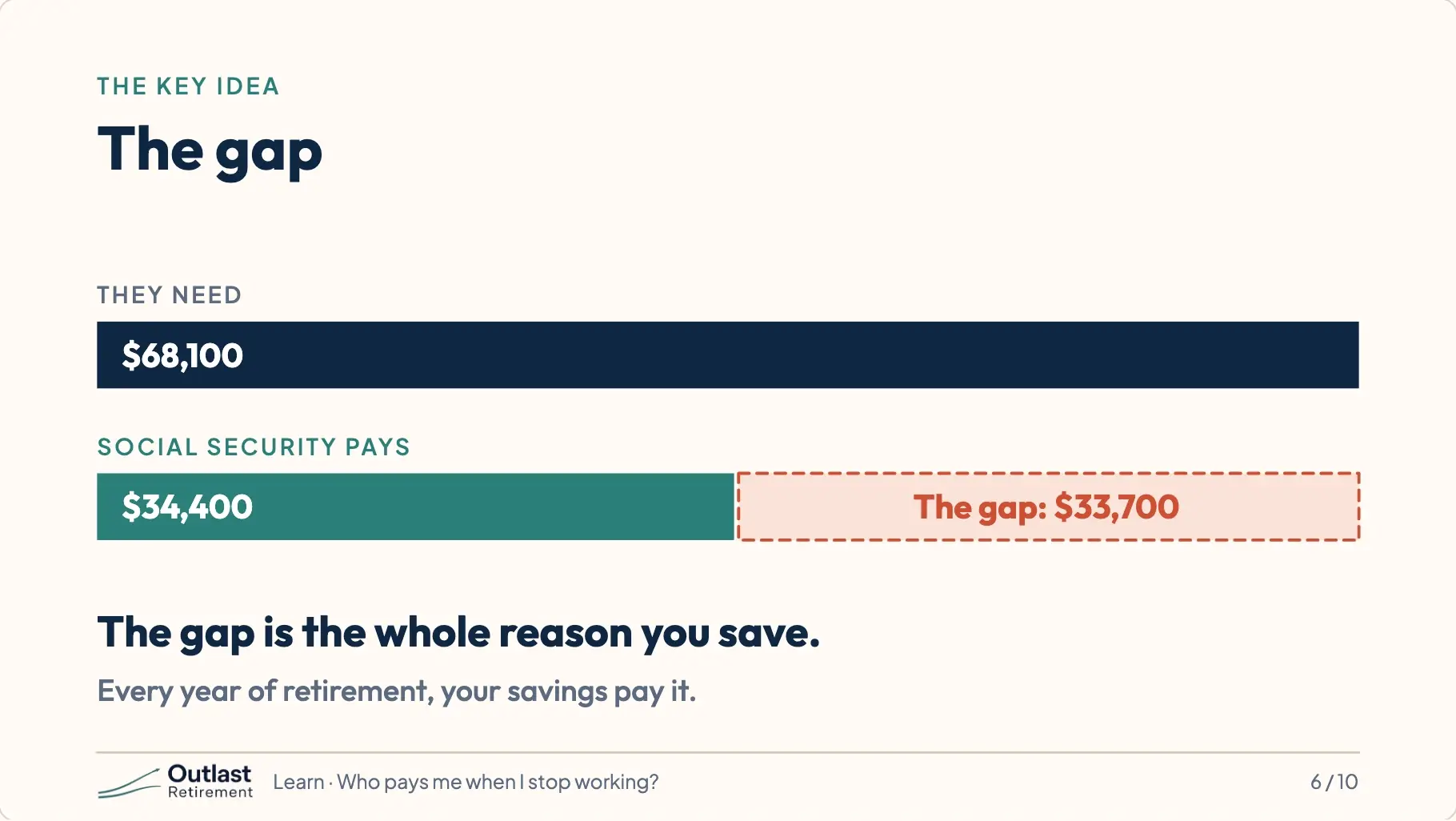
Social Security pays thirty-four thousand. They need sixty-eight. The difference, close to thirty-four thousand dollars, is called the gap. Remember that word. The gap is the whole reason you save.
7.Savings fill the gap, every year
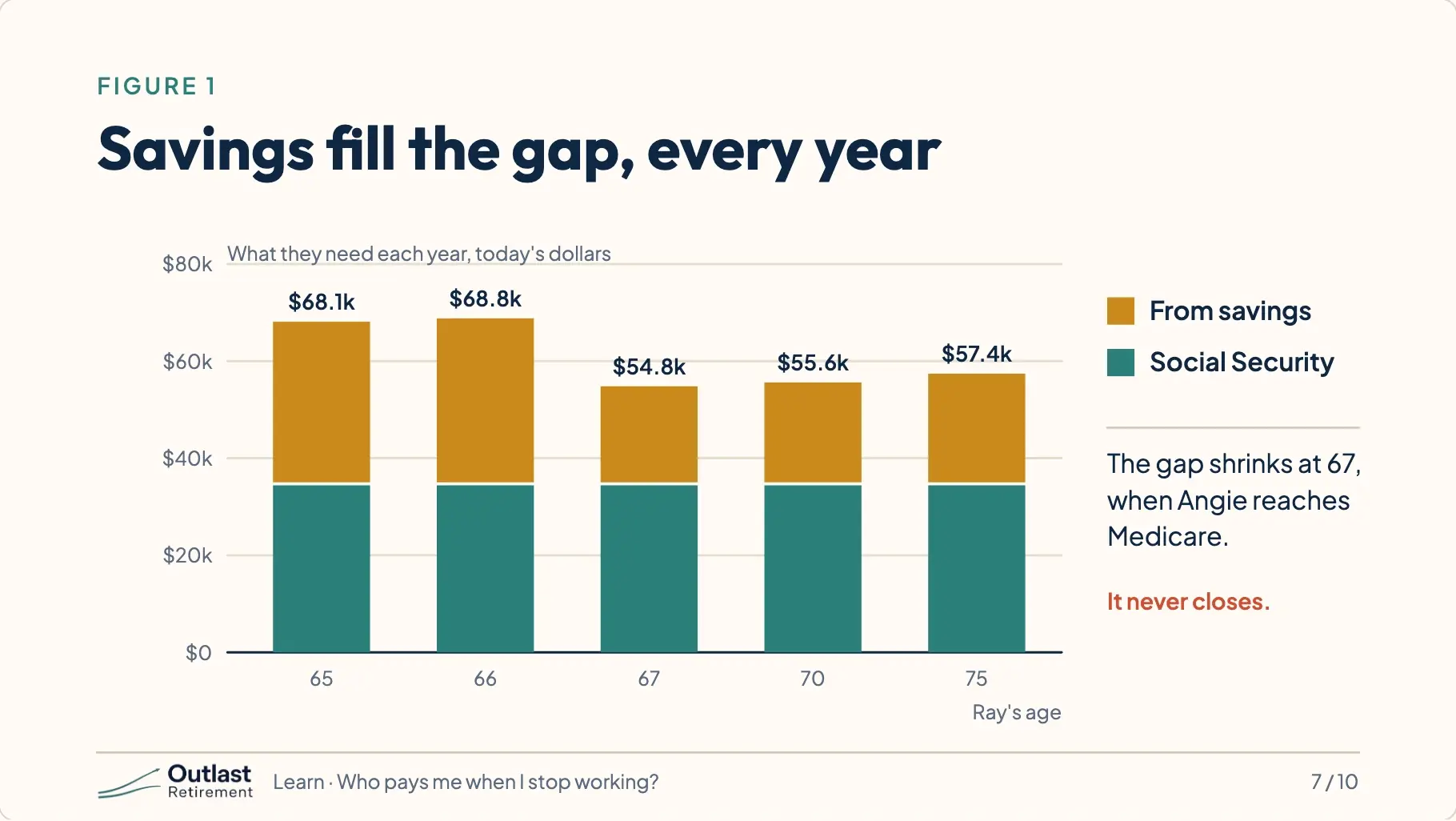
The gap gets filled from savings. Every year Ray and Angie are retired, they take what Social Security does not cover out of what they have saved. A big gap empties the savings fast. A small gap lets them last.
8.Year by Year: one row for every year
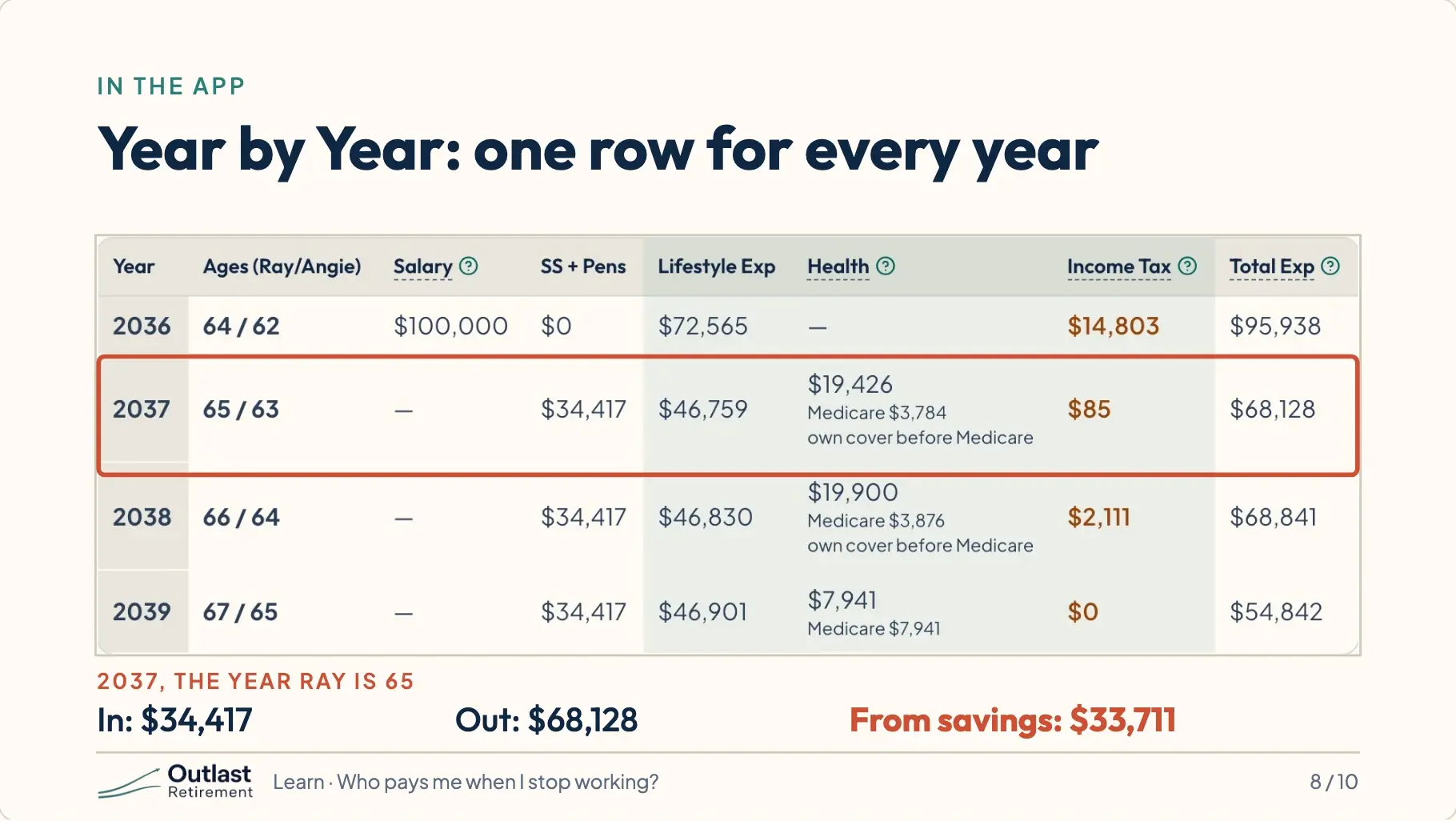
Here it is in OutlastRetirement. This page is called Year by Year. Every row is one year of Ray and Angie’s life. Find the year Ray turns 65. You can see the Social Security coming in, the costs going out, and the amount taken from savings to cover the gap.
9.Two ways to shrink a gap
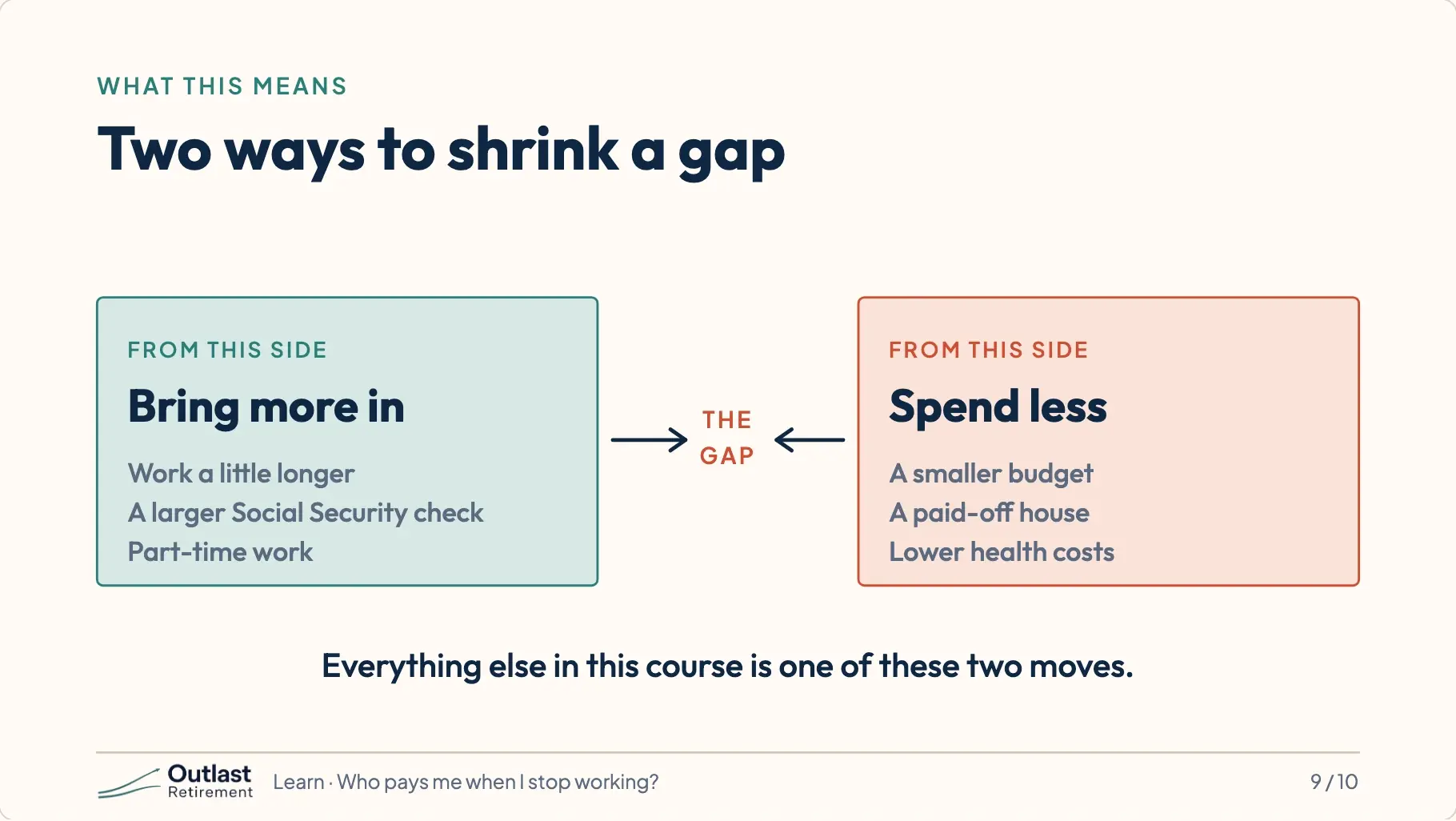
There are only two ways to shrink a gap. Bring more in, or spend less. Everything else in this course is one of those two moves.
10.Open the Parkers’ Year by Year
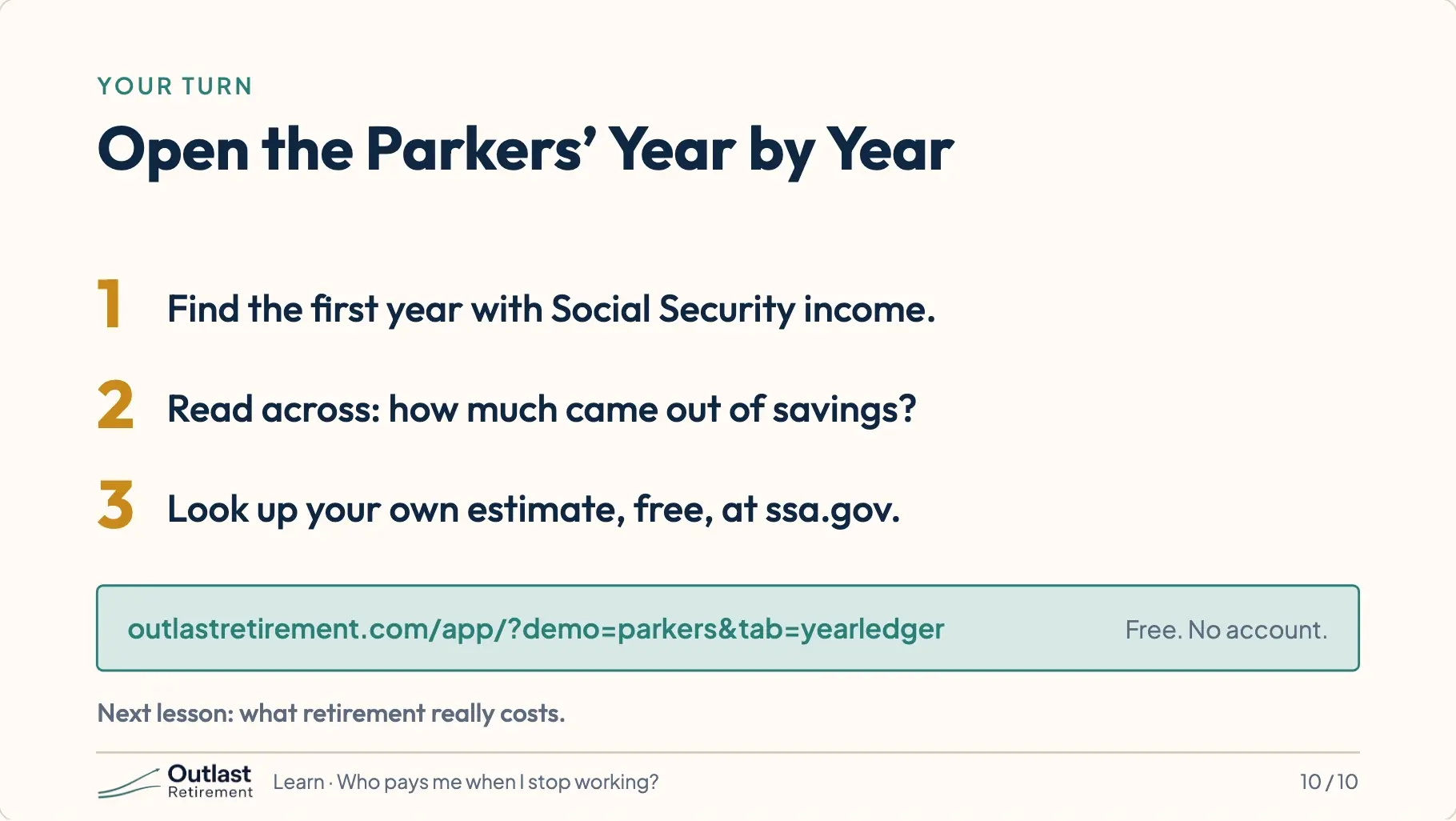
Your turn. Open Ray and Angie’s Year by Year page with the link below. Find the first year with money in the Social Security column. Then look across that row and find how much came out of savings. And for your own plan: do you know what your Social Security check will be? You can look it up for free at ssa.gov. Write the number down. You will need it in lesson four. Next time: what retirement really costs. This is education, not financial advice.
Try it
Ray and Angie’s plan opens with every number already filled in. Nothing you change there is saved, and it does not touch a plan of your own.
Open Ray and Angie’s Year by Year