

Three levers that each buy years, and together fix Ray and Angie’s plan.
This is an educational walkthrough using a fictional family. It is not financial advice, and the right answers for you depend on facts a lesson cannot know.
Watch this lesson (5 minutes) Opens YouTube in a new tab.
1.My plan runs short. Now what?
Ray and Angie’s money runs out when Ray is 82. Maybe your plan said something like that too. Today we fix theirs, and you will see how to fix yours. As always: this is an educational walkthrough using a fictional family. It isn’t financial advice.
2.Three levers
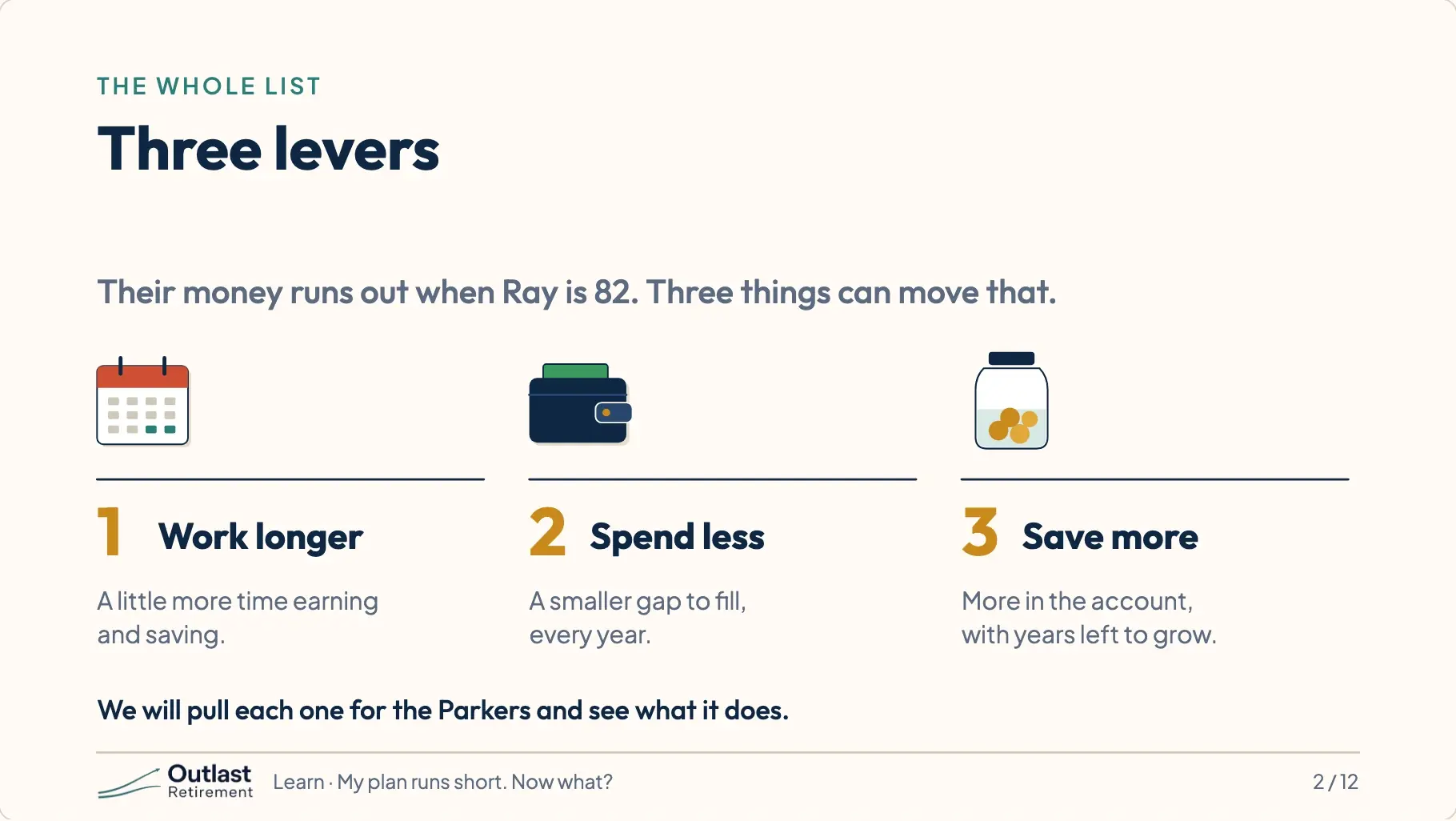
There are three levers. Work a little longer. Spend a little less. Save a little more. That’s the list. We will pull each one for Ray and Angie and see what it does.
3.Work two more years
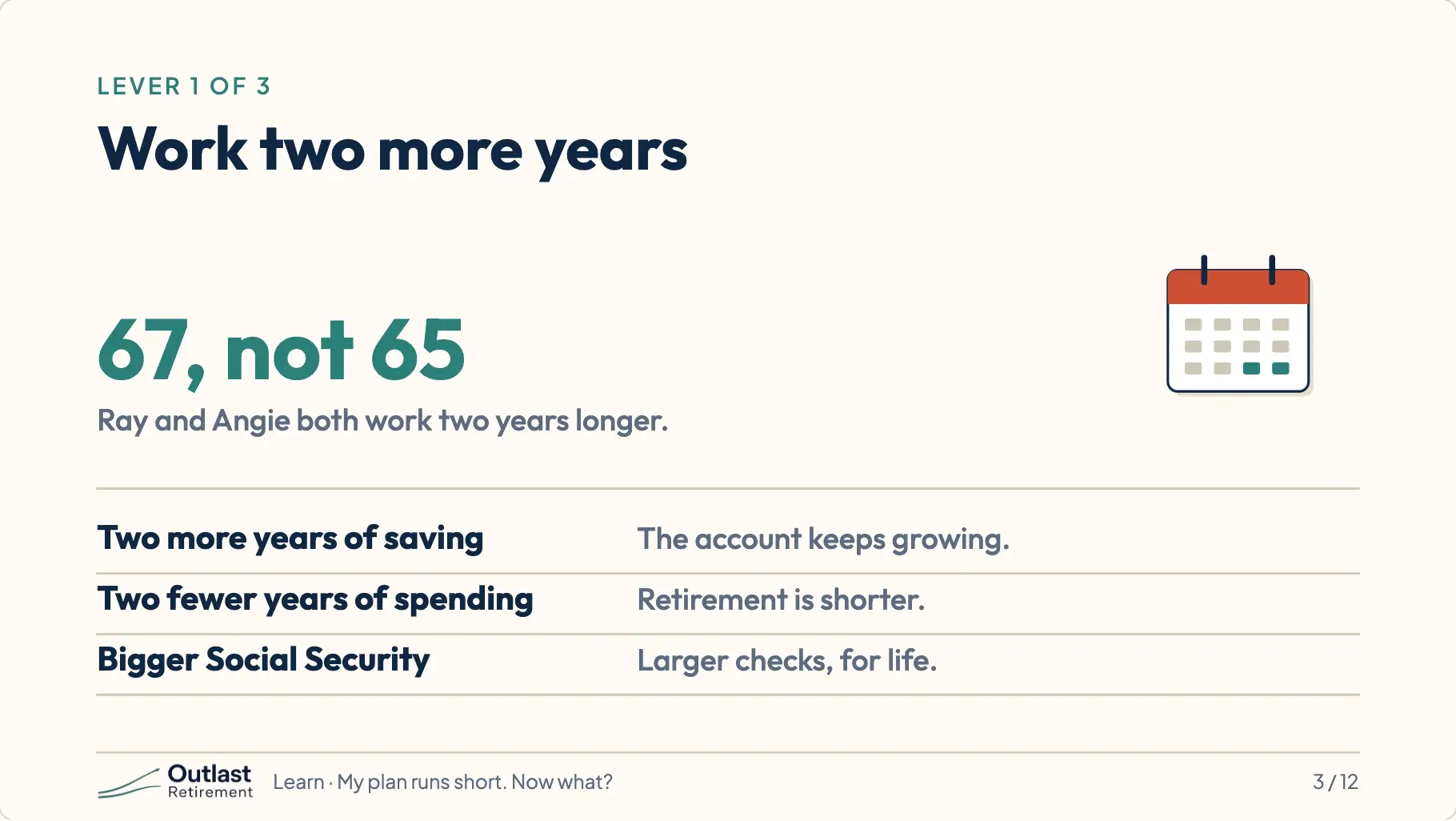
Lever one. Ray and Angie work two more years, to 67 instead of 65. That does three things at once. Two more years of saving. Two fewer years of spending. And bigger Social Security checks for life.
4.The money lasts eleven years longer
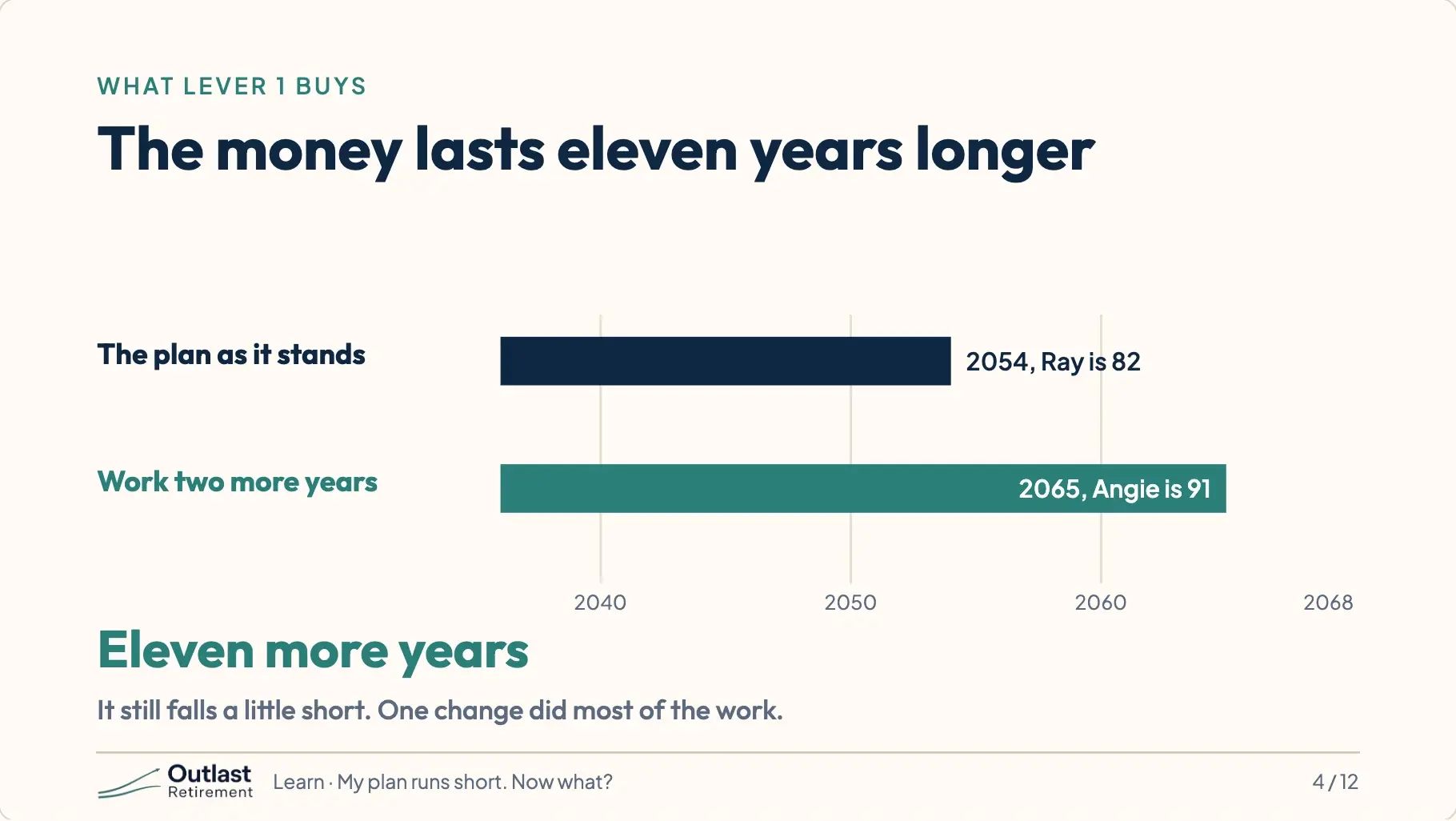
Here is the result. Instead of running out when Ray is 82, the money lasts until Angie is 91. Eleven more years. It still falls a little short, but look how far one change moved it.
5.Spend $500 a month less
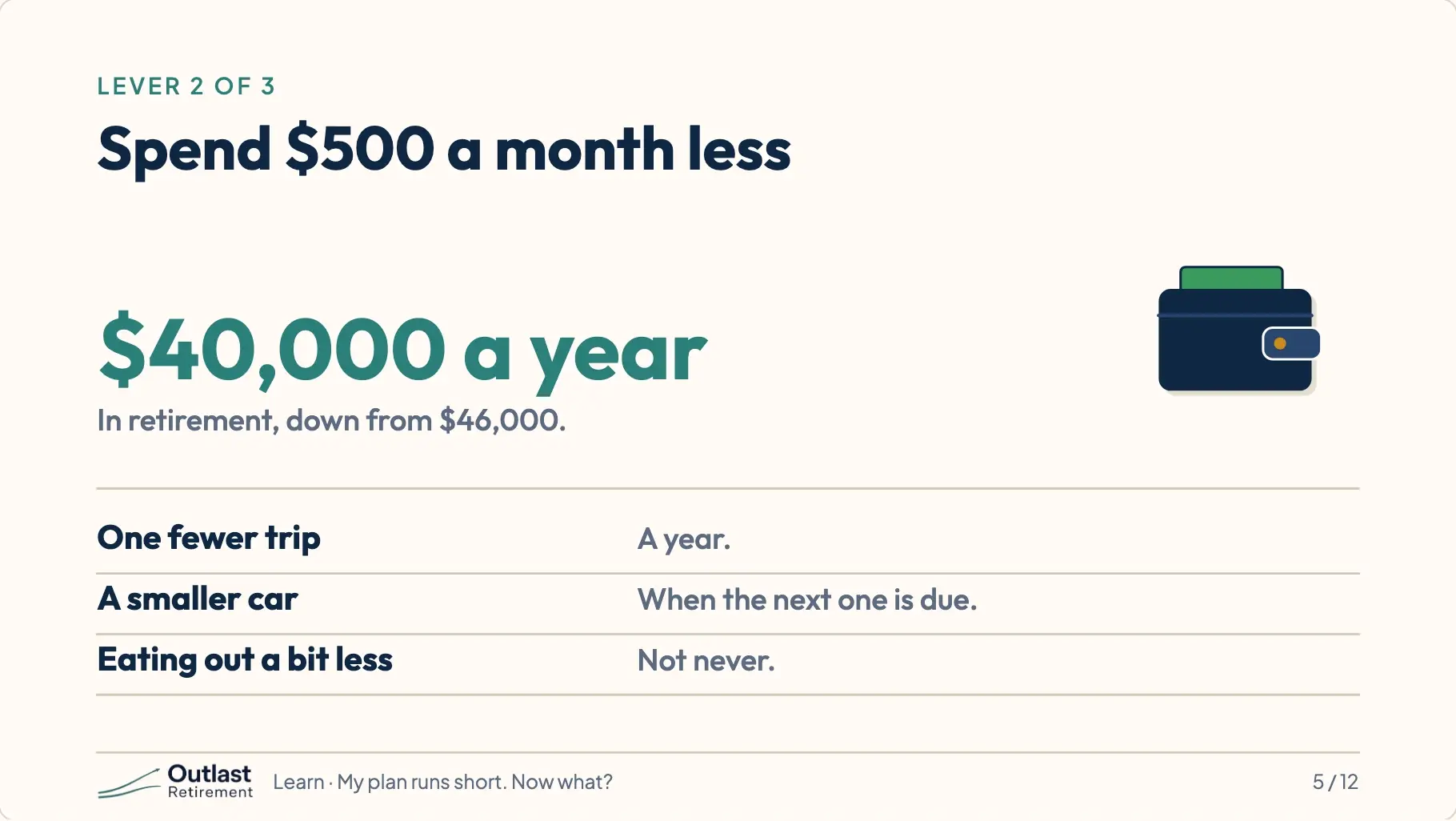
Lever two. Back to the original plan, and this time they spend five hundred dollars a month less in retirement. One fewer trip. A smaller car. Eating out a bit less.
6.The money lasts seven years longer
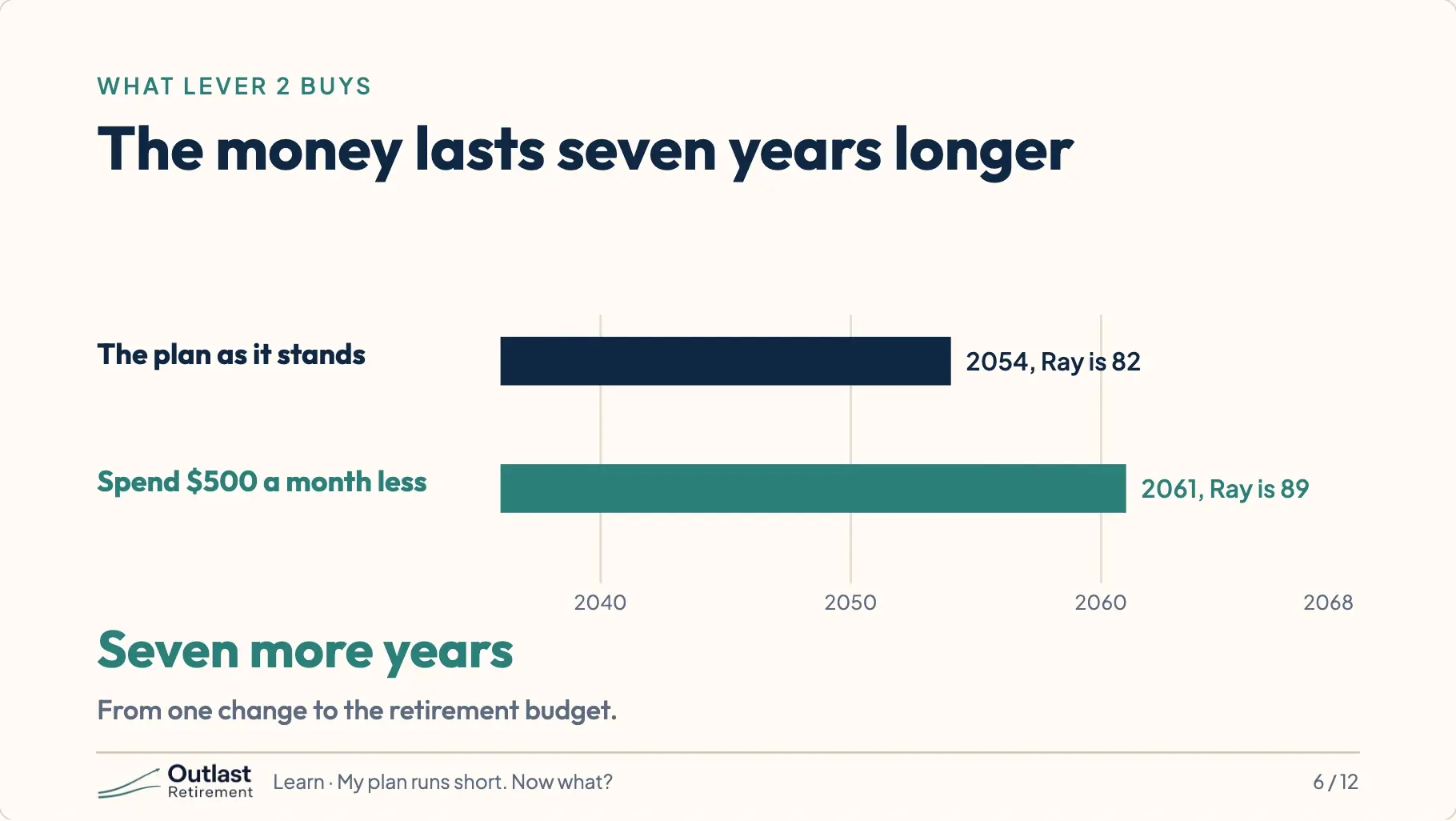
The money now lasts until Ray is 89. Seven more years.
7.Save $500 a month more
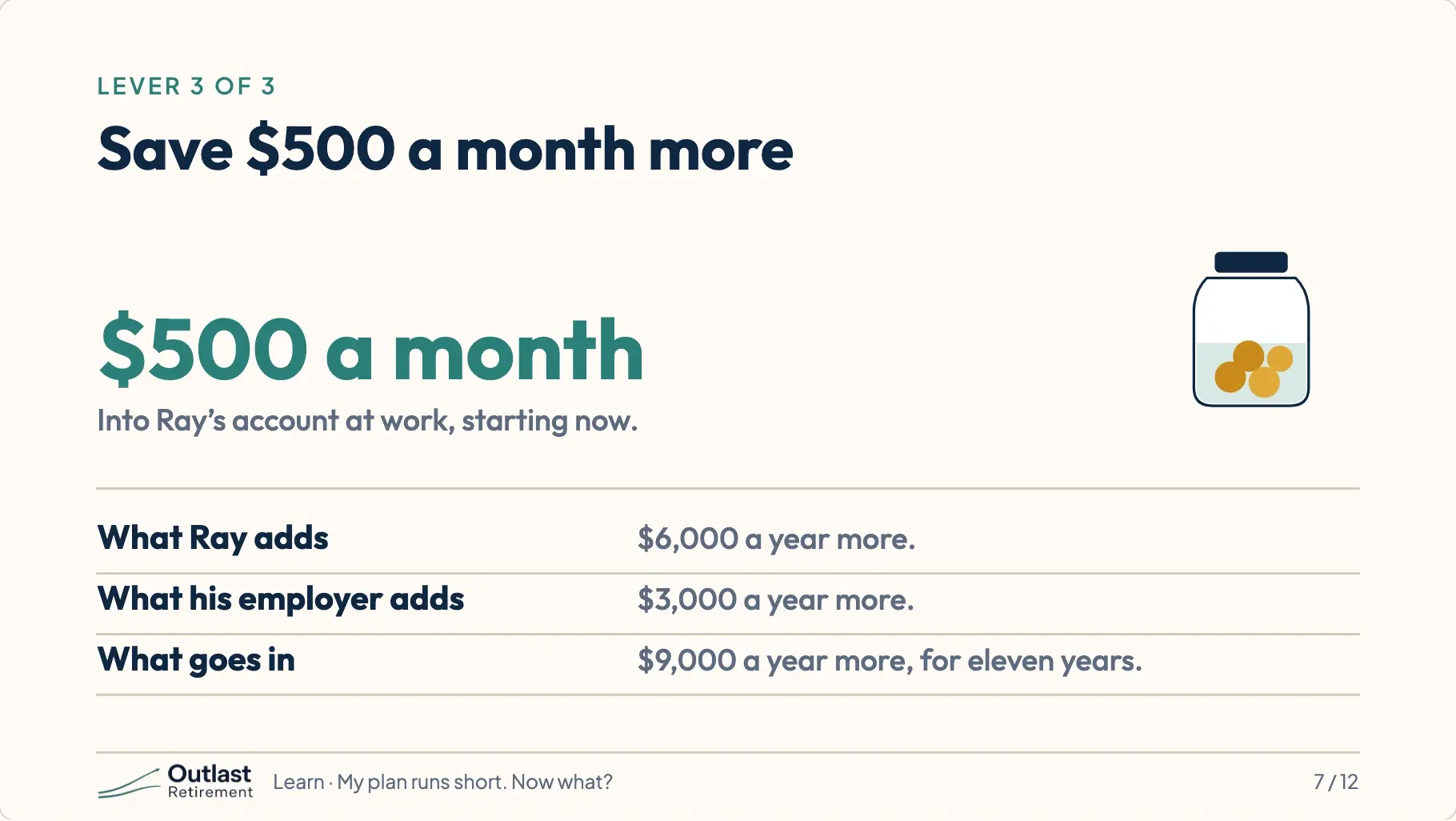
Lever three. Starting now, Ray puts five hundred dollars a month more into his retirement account at work. His employer matches part of it, so more goes in than he gives up.
8.The money lasts seven years longer
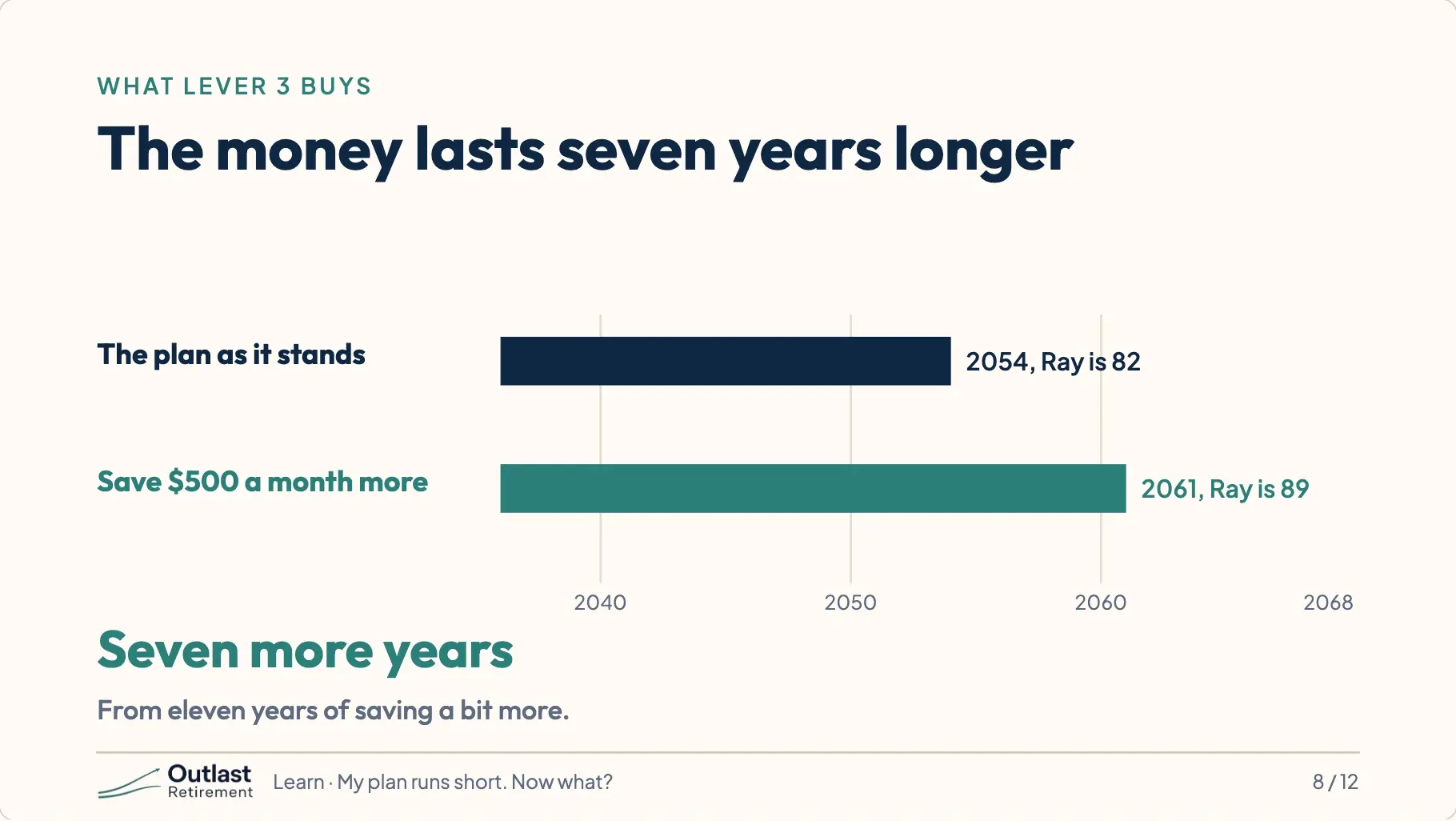
Again the money lasts until Ray is 89. Seven more years, from eleven years of saving a bit more.
9.All three together: the money lasts
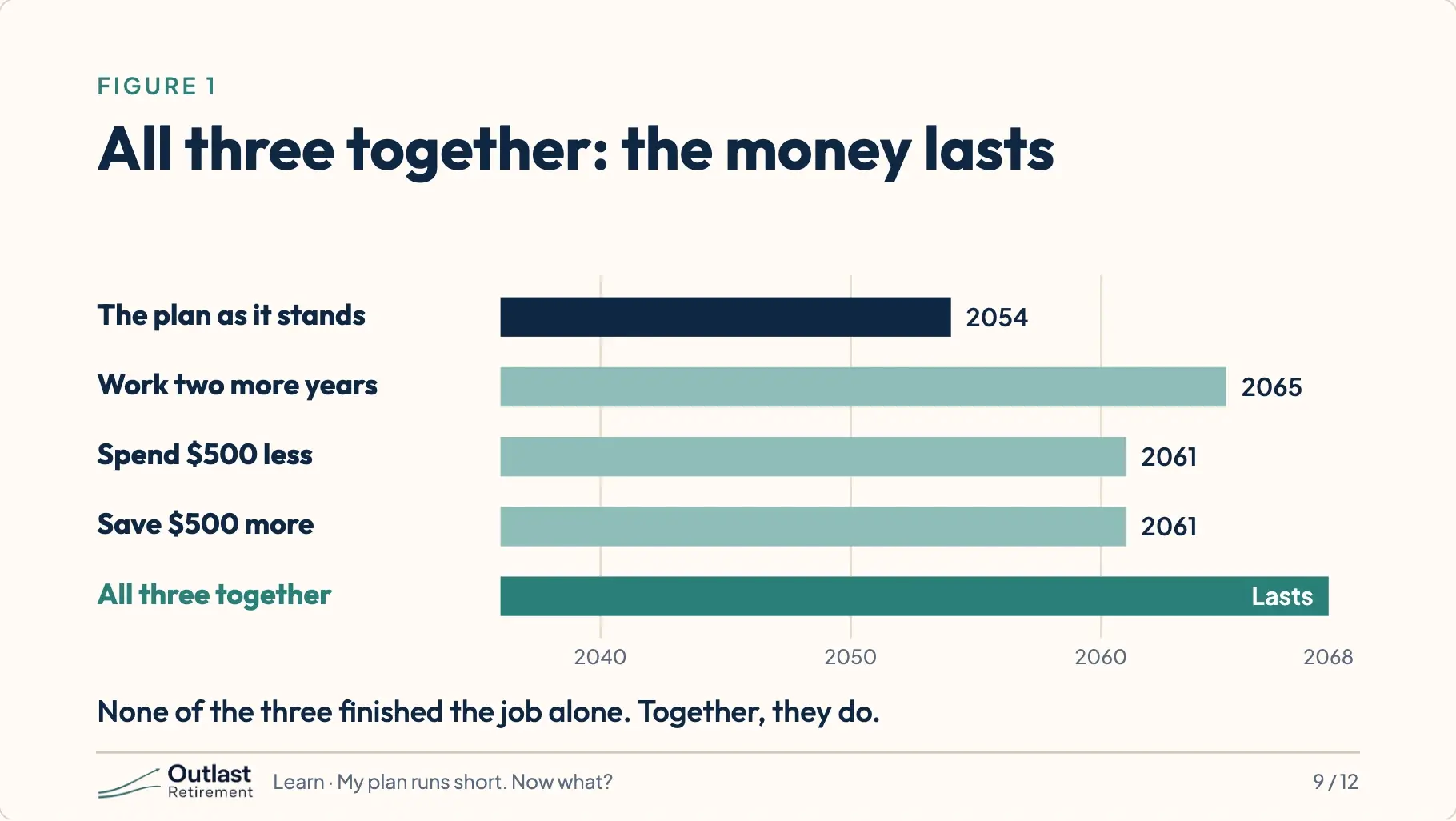
None of the three finished the job alone. Now pull all three. Work two more years. Spend five hundred less. Save five hundred more. The money lasts the rest of their lives.
10.The new verdict
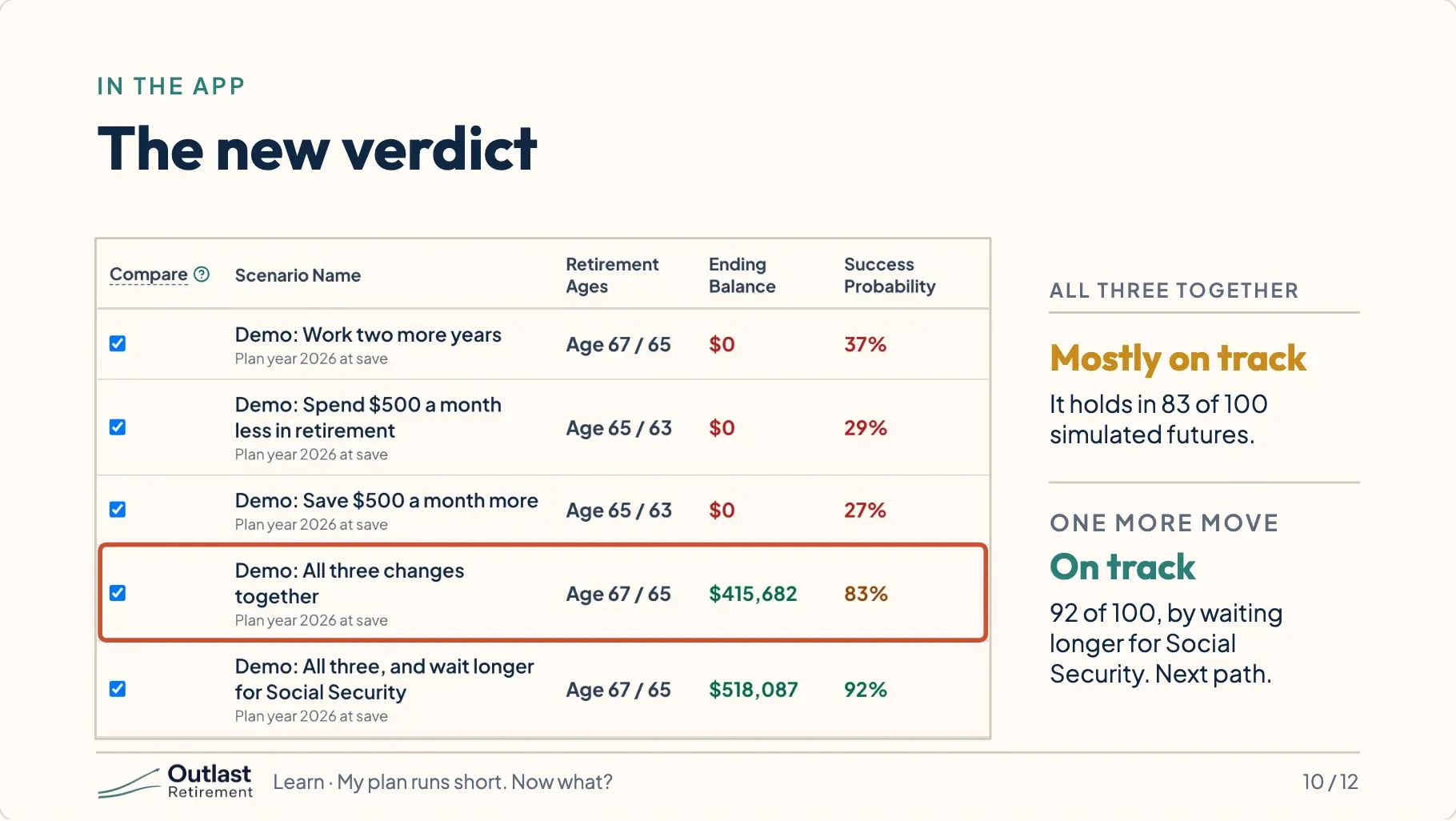
The verdict moves from runs short to mostly on track. That means the plan holds in about four out of five possible futures. To reach on track, there is one more move, about when to start Social Security. That is the first lesson of the next path.
11.No single big sacrifice
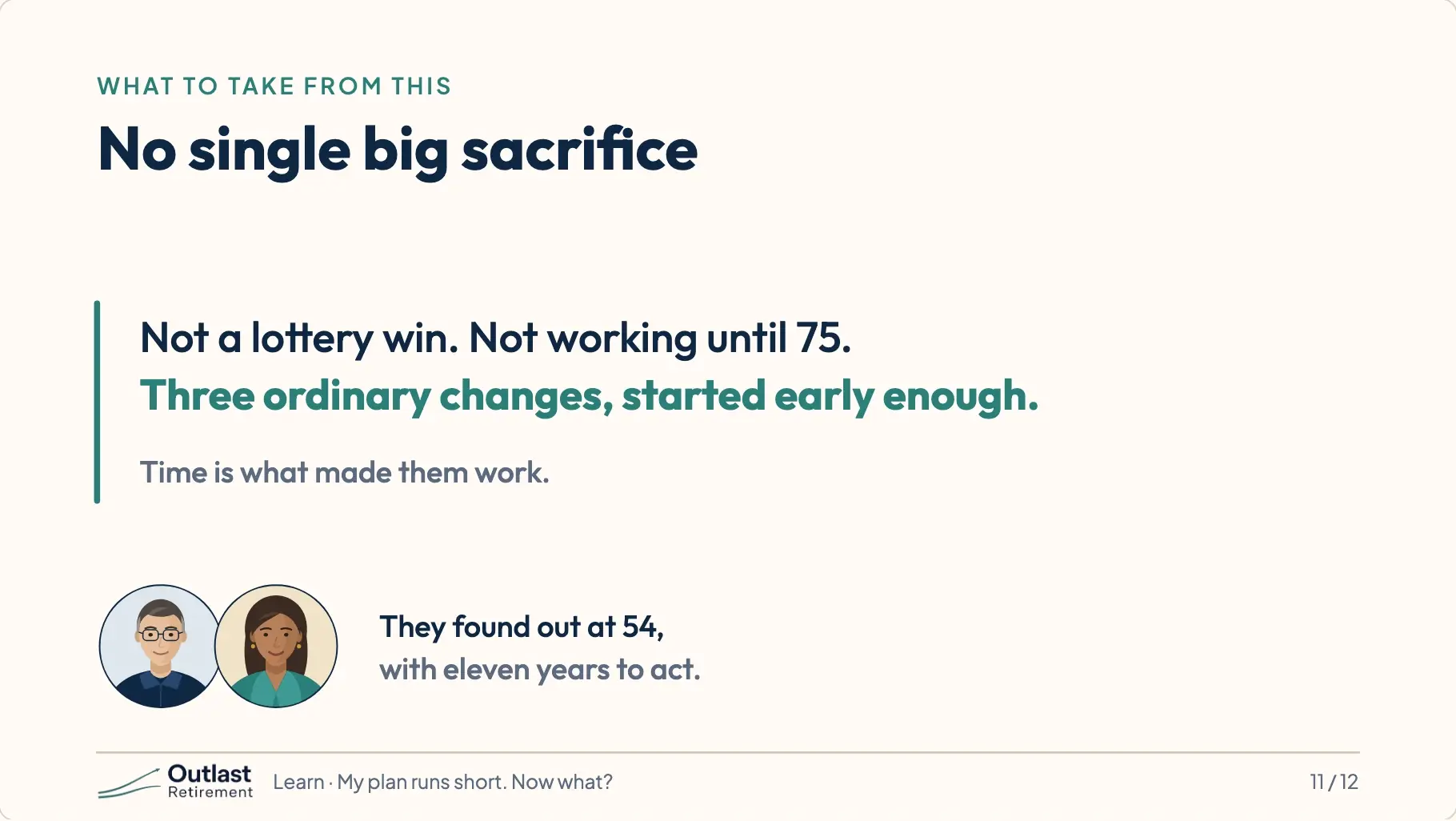
Here is the lesson. Ray and Angie did not need to win the lottery or work until 75. They needed three ordinary changes, started early enough. Time is what made them work.
12.Pull one lever in your own plan

Your turn. Open the Scenarios page for Ray and Angie and look at each saved scenario next to their plan. Then open your own plan and pull one lever. Change your retirement age by one year, or your spending by a hundred dollars a month, and watch your answer move. That is the end of Start Here. You know what a plan is, where the money comes from, what it costs, how to build one, how to read it, and how to fix it. Next: the big decisions. This is education, not financial advice.
Try it
Ray and Angie’s plan opens with every number already filled in. Nothing you change there is saved, and it does not touch a plan of your own.
Open Ray and Angie’s Scenarios