

Three questions that choose between plans, and Ray’s and Angie’s different answers.
This is an educational walkthrough using a fictional family. It is not financial advice, and the right answers for you depend on facts a lesson cannot know.
Watch this lesson (3 minutes) Opens YouTube in a new tab.
1.What are you planning for?
In Lesson 1 we asked one question: will my money last? By now you’ve seen that the answer depends on something only you can decide, which is what you’re actually planning for. As always: this is an educational walkthrough using a fictional family. It isn’t financial advice.
2.What we’ve covered
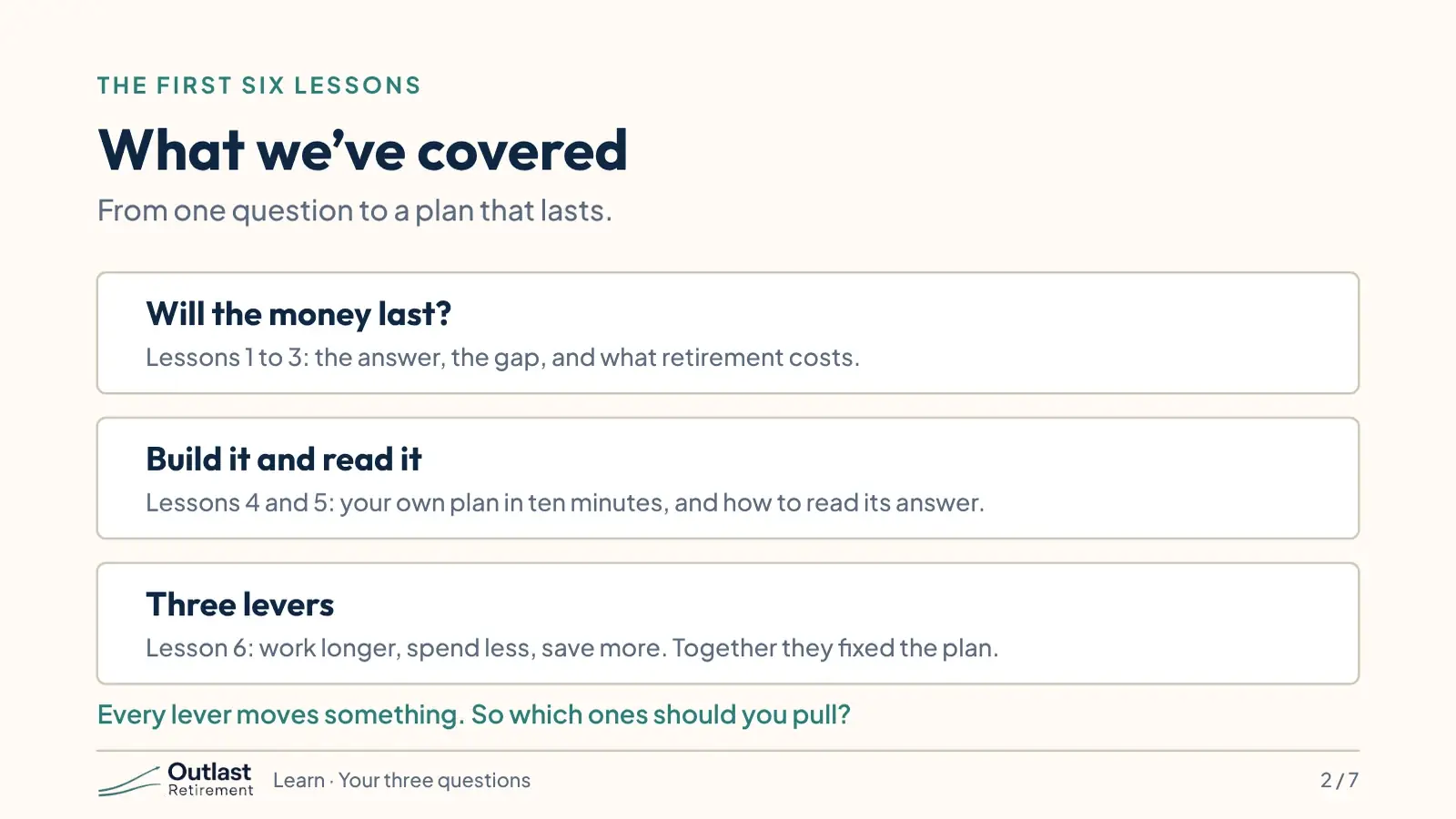
Over the last six lessons, you asked whether the money lasts, found the gap, and saw what retirement costs. You built a plan of your own and learned to read its answer. And in lesson six, three levers fixed Ray and Angie’s plan: work longer, spend less, save more. Every lever moves something. So which ones should you pull?
3.Three questions
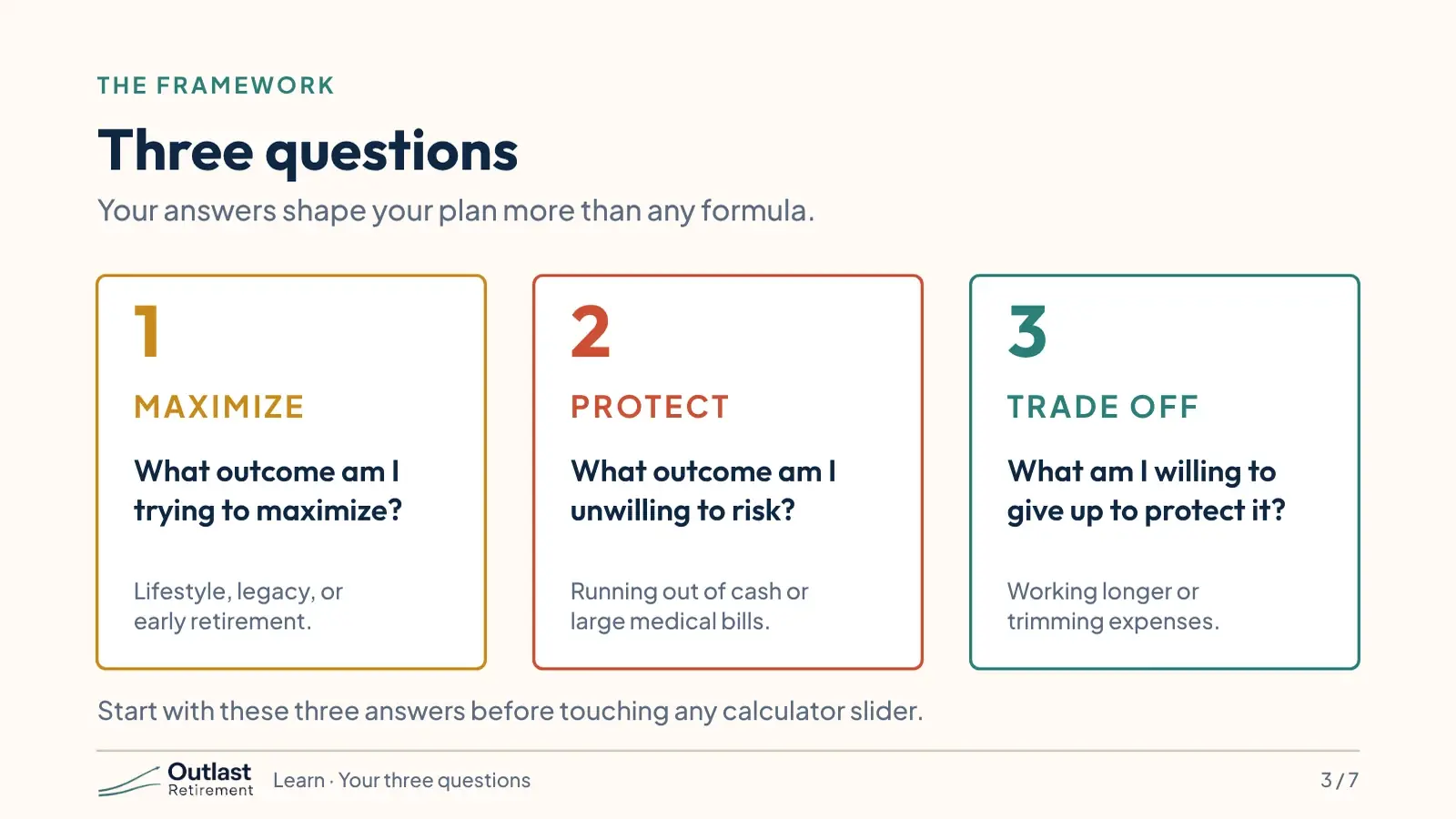
It comes down to three questions. First, what outcome are you trying to maximize? Second, what outcome are you unwilling to risk? And third, what are you willing to give up to protect it? Your answers shape your plan more than any formula.
4.Same household, different answers
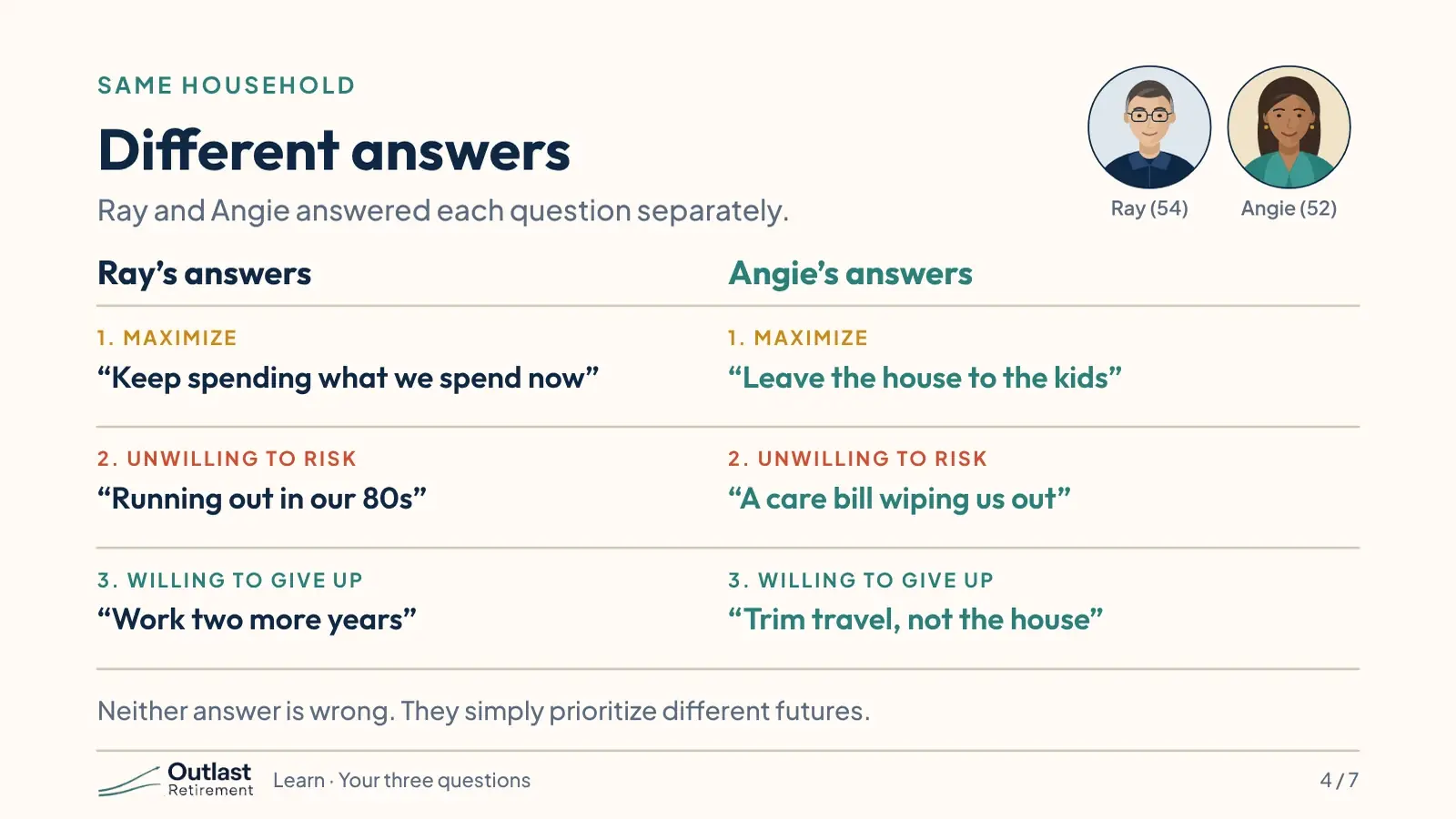
Ray and Angie answered separately. Ray wants to keep their lifestyle. Angie wants to leave the house to the kids. Ray’s biggest fear is running out in their eighties. Angie’s is a care bill that wipes them out. And what they’d give up is different too. Ray would work two more years. Angie would trim travel but keep the house.
5.Two scenarios: Ray’s plan and Angie’s plan
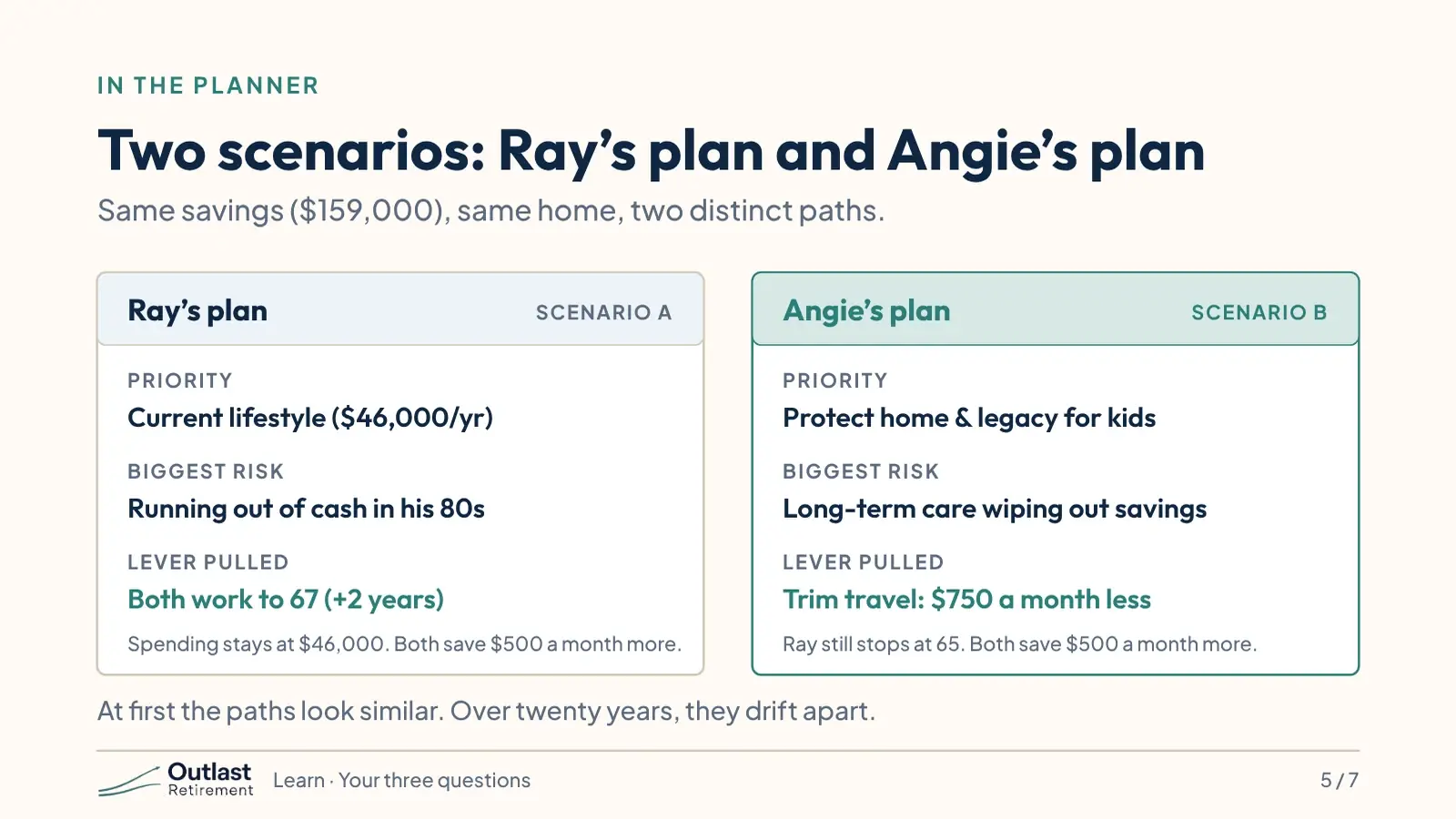
So they saved each set of answers as its own scenario. Same savings, same house, two plans. In Ray’s plan, they both work two more years and keep spending what they spend now. In Angie’s, they stop on time and spend seven hundred fifty dollars a month less, mostly on travel. Both start saving five hundred dollars a month more, the lever from lesson six. For the first several years the two paths look the same, then they drift apart. That gives them time to decide.
6.Neither plan is wrong
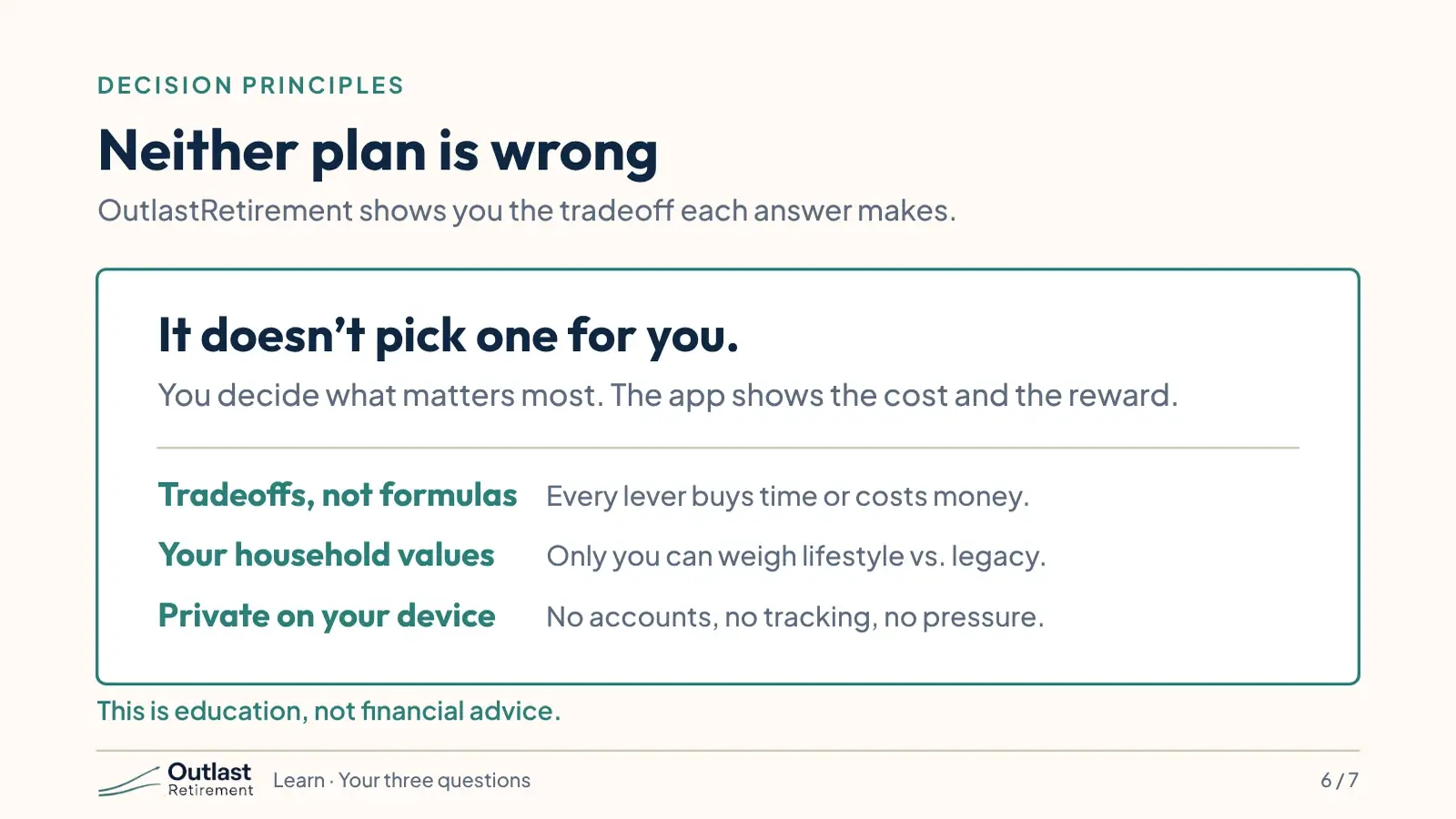
Neither plan is wrong. OutlastRetirement shows you the tradeoff each answer makes. It doesn’t pick one for you. This is education, not financial advice.
7.Your turn: three steps for your plan
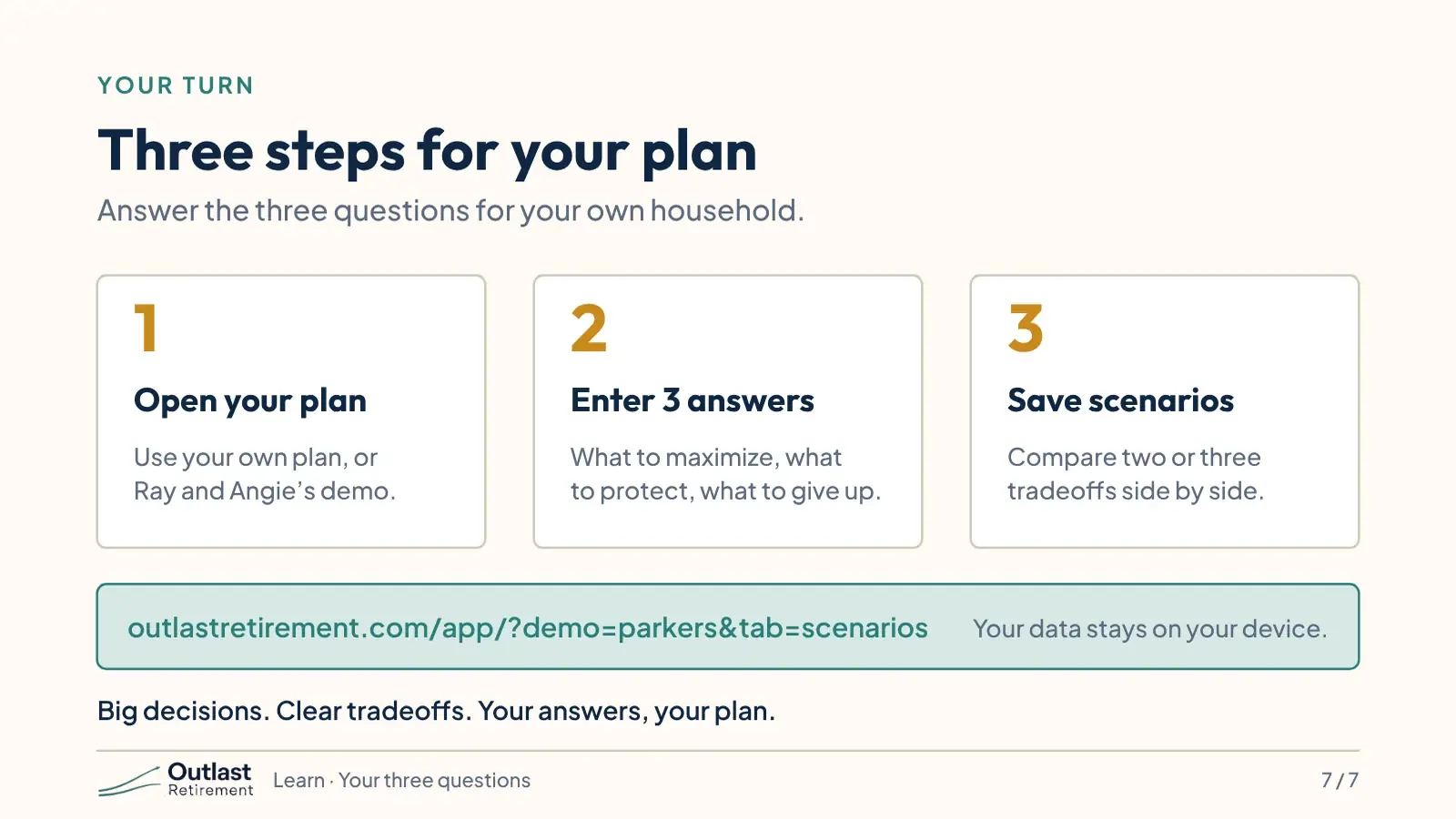
Now it’s your turn. Open your plan. Enter your own three answers in the app. And save it as a scenario, or a few, to compare. Your plan data and calculations stay on your device. Your answers, your plan. This is education, not financial advice.
Try it
Ray’s plan and Angie’s plan are saved there with their answers under each name. Nothing you change there is saved, and it does not touch a plan of your own.
Open Ray and Angie’s Scenarios