

Claiming at 62, 67 or 70, and what waiting does for Ray and Angie.
This is an educational walkthrough using a fictional family. It is not financial advice, and the right answers for you depend on facts a lesson cannot know.
Watch this lesson (3 minutes) Opens YouTube in a new tab.
1.When should I start Social Security?
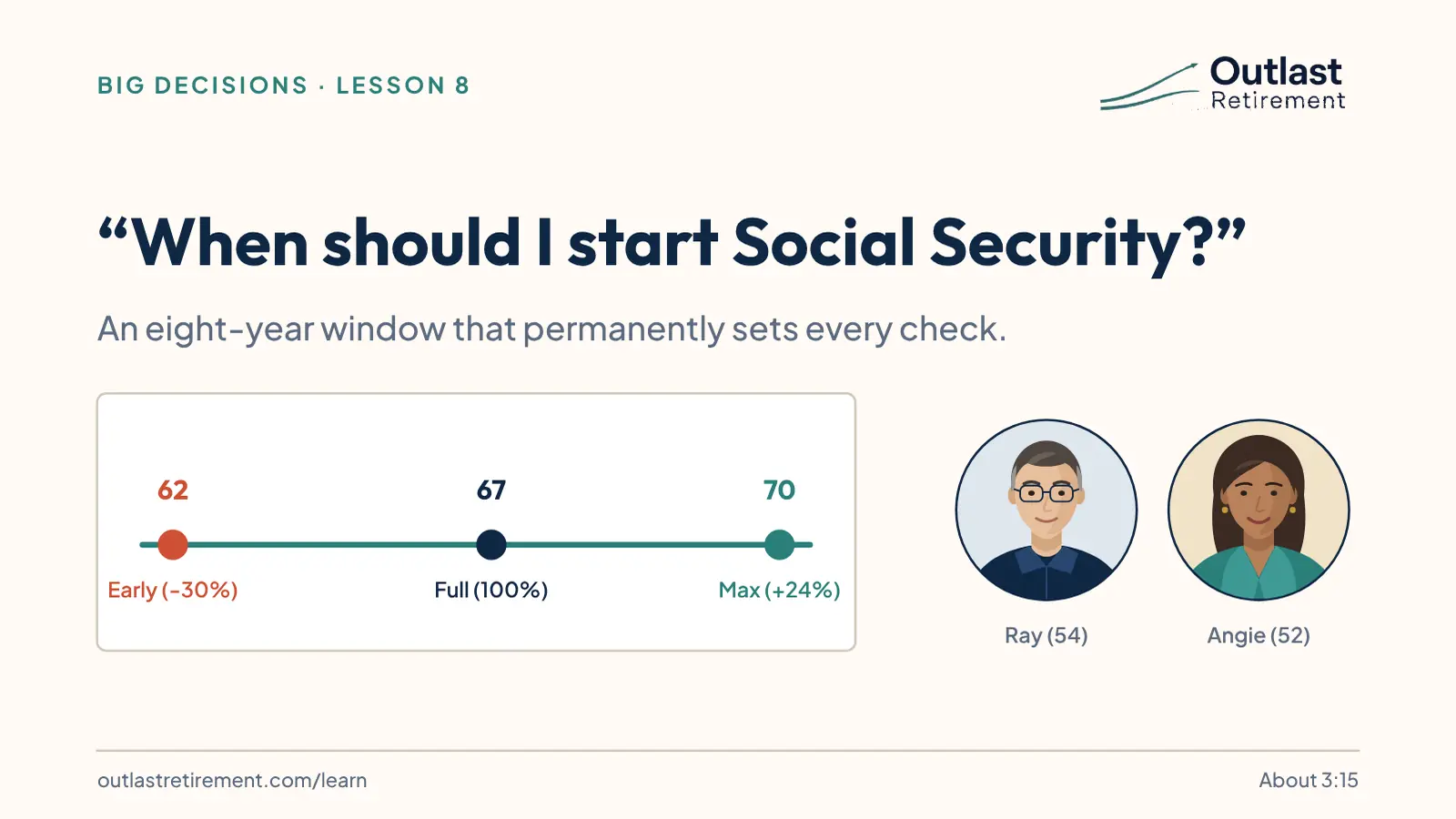
Between age sixty-two and seventy, you have an eight-year window to start Social Security. Claim early, and every check is smaller for life. Wait, and every check grows. So when should you claim? As always: this is an educational walkthrough using a fictional family. It isn’t financial advice.
2.Three milestone ages
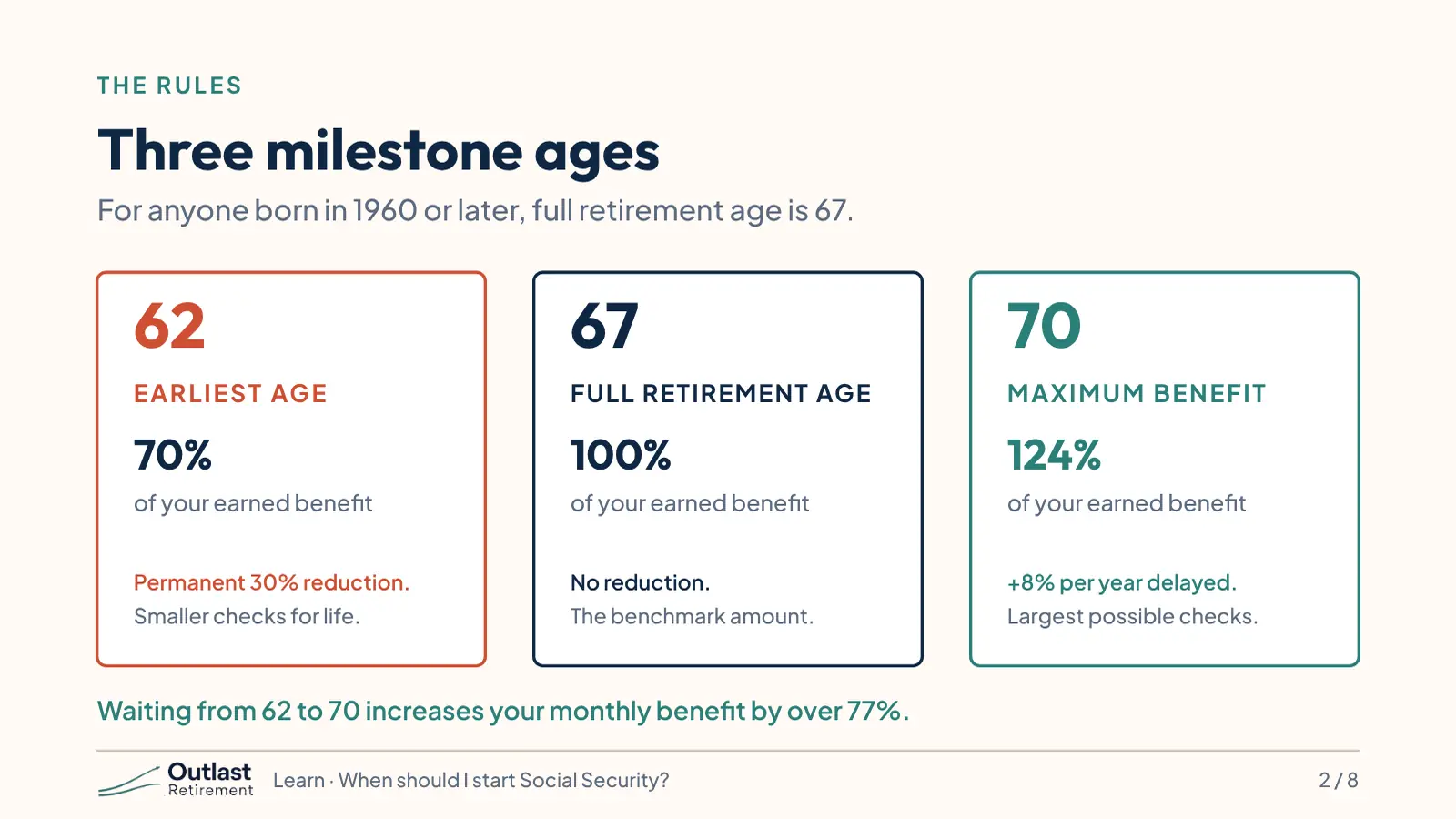
For anyone born in 1960 or later, full retirement age is sixty-seven. That is when you receive one hundred percent of the benefit you earned. If you start at sixty-two, your checks are permanently cut by thirty percent. But if you wait until seventy, your check grows by eight percent every year you delay. At seventy, that is twenty-four percent more, every month, for life.
3.Ray and Angie’s earned benefits
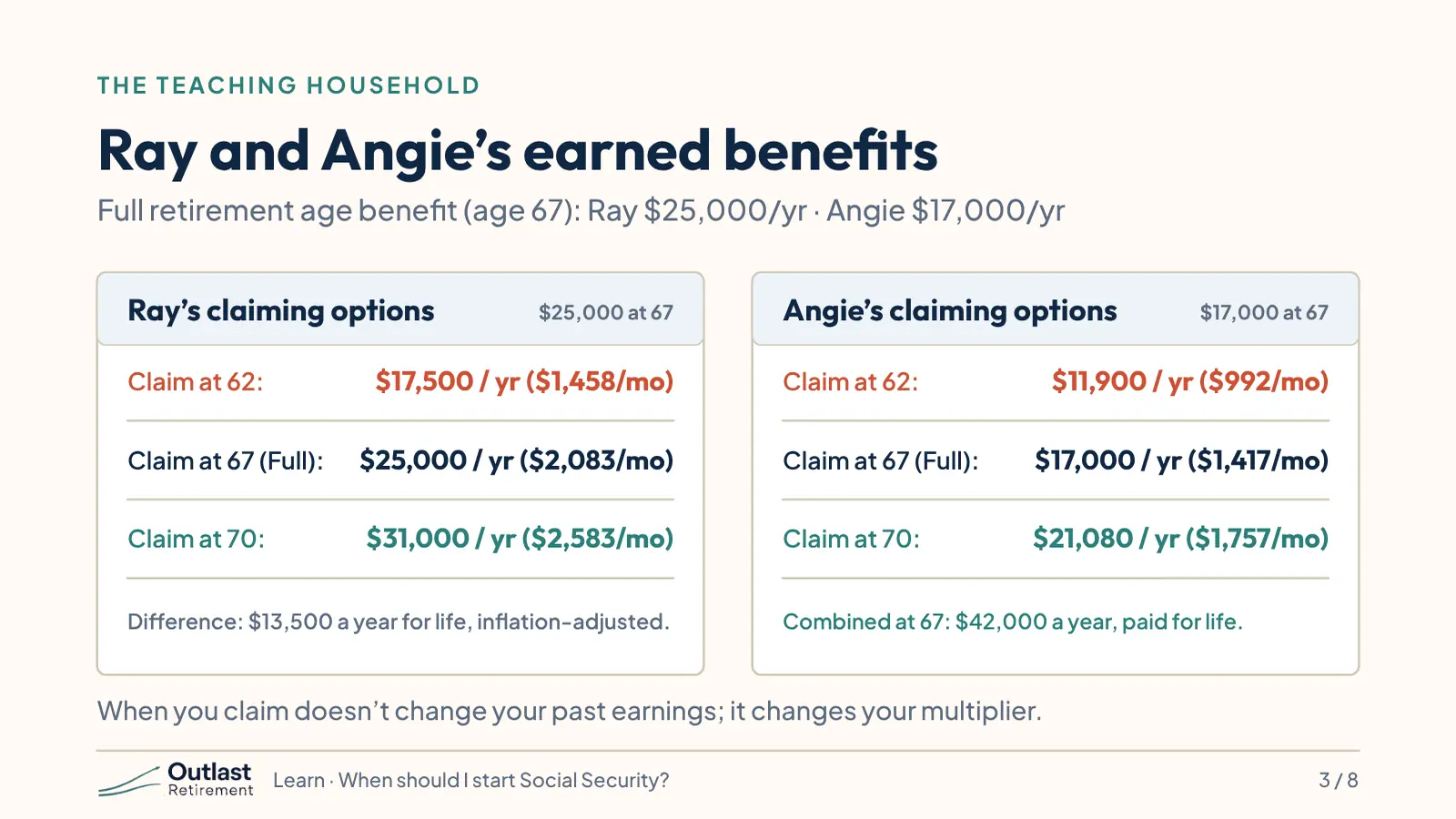
Here are Ray and Angie’s numbers at sixty-seven. Ray’s full benefit is twenty-five thousand dollars a year. Angie’s is seventeen thousand. If Ray starts at sixty-two, his check drops to seventeen thousand five hundred. If he waits until seventy, it grows to thirty-one thousand dollars a year. That is a thirteen thousand five hundred dollar difference, every year, adjusted for inflation.
4.Stop working at 62 instead
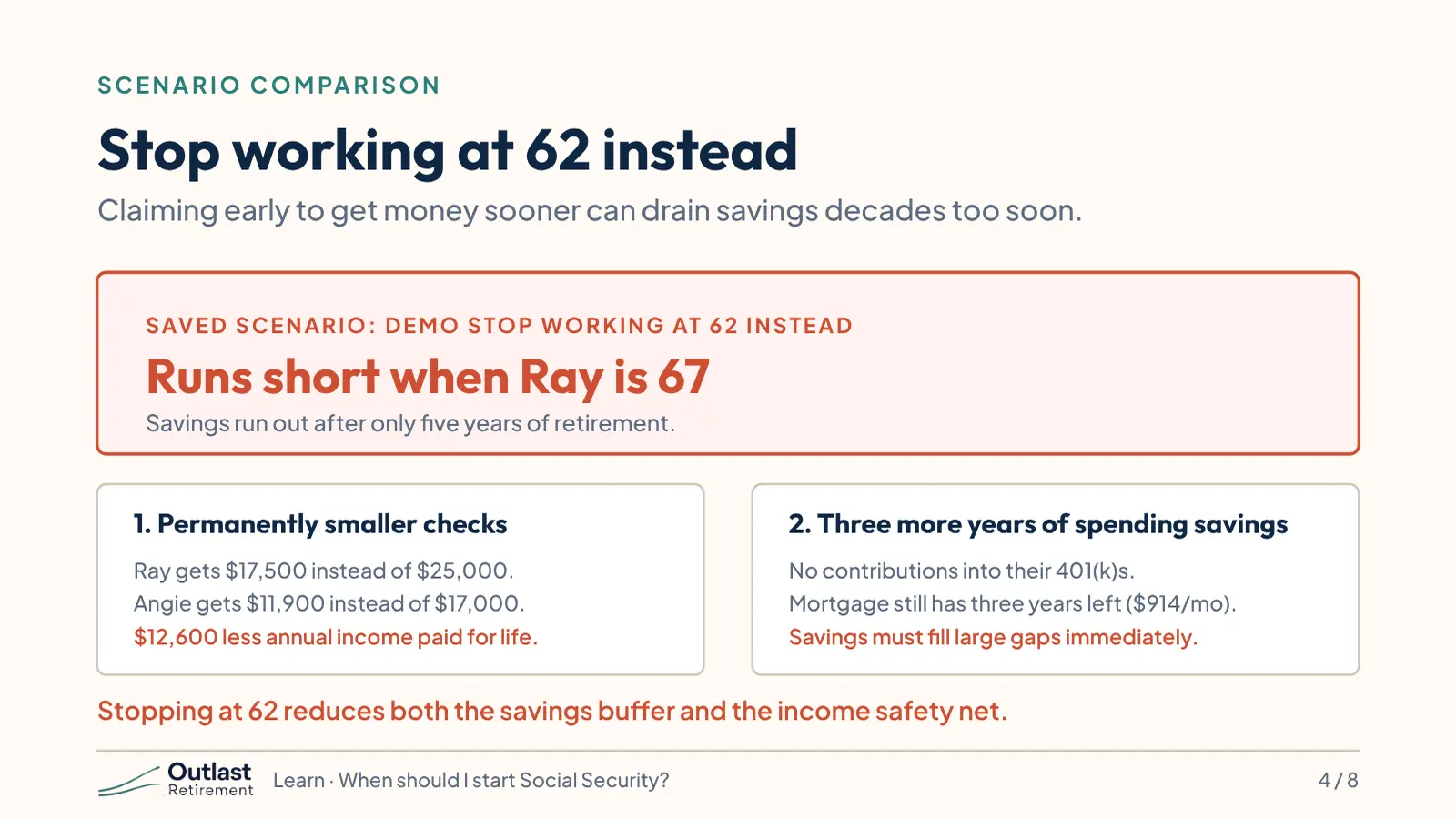
In their plan, what happens if they stop working and claim at sixty-two? The app shows the result instantly. With smaller checks and three fewer years to save, their retirement savings run out when Ray is just sixty-seven. Claiming early to get money sooner can leave you with the smallest check right when you need it most.
5.Three levers brought them close
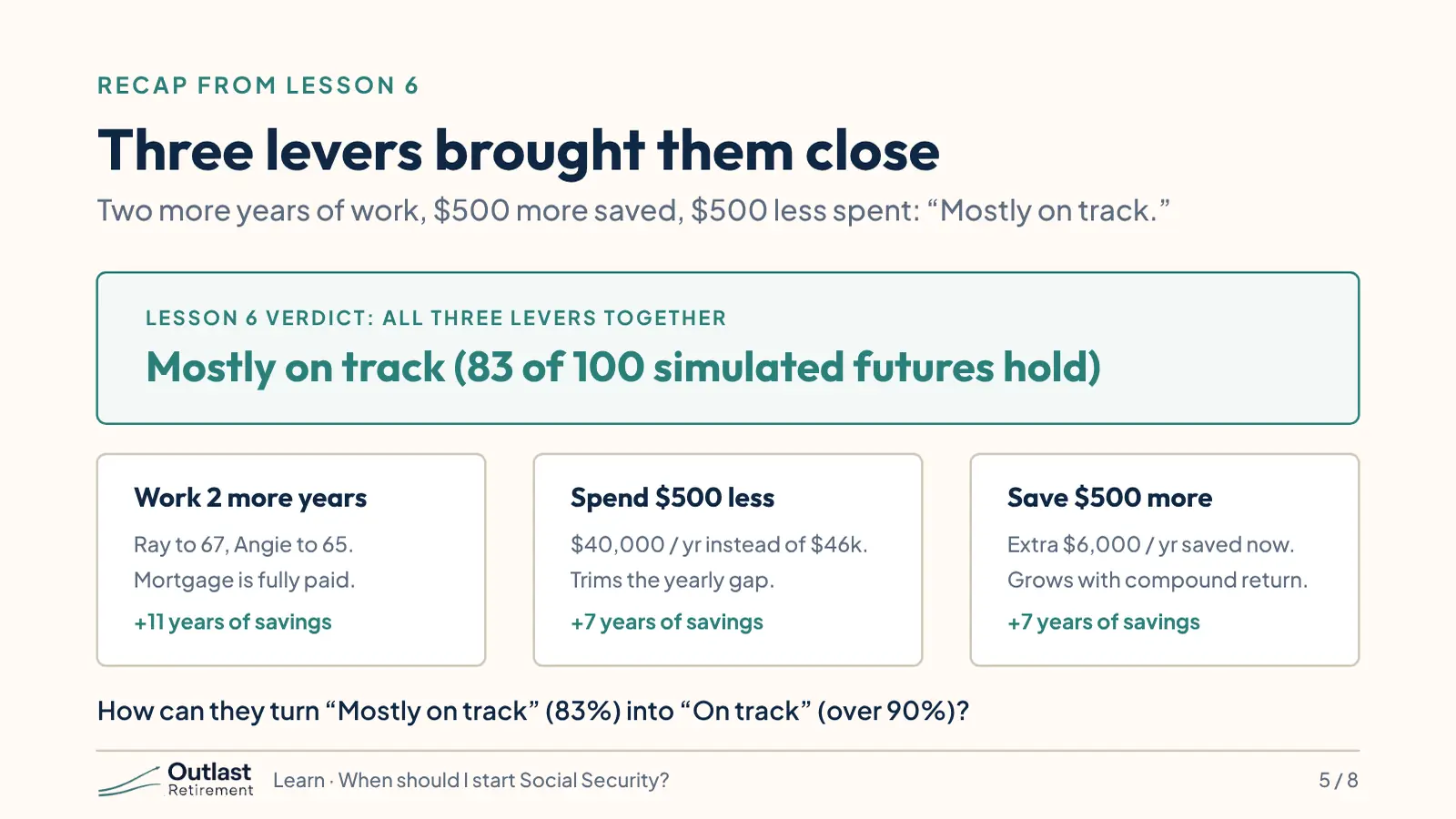
In lesson six, three levers turned Ray and Angie’s plan around: working two more years each, Ray to sixty-seven and Angie to sixty-five, saving five hundred dollars more a month, and spending five hundred less. That brought them to mostly on track, holding in eighty-three out of one hundred market futures. But they wanted to know: how do we reach on track?
6.All three, and wait longer for Social Security
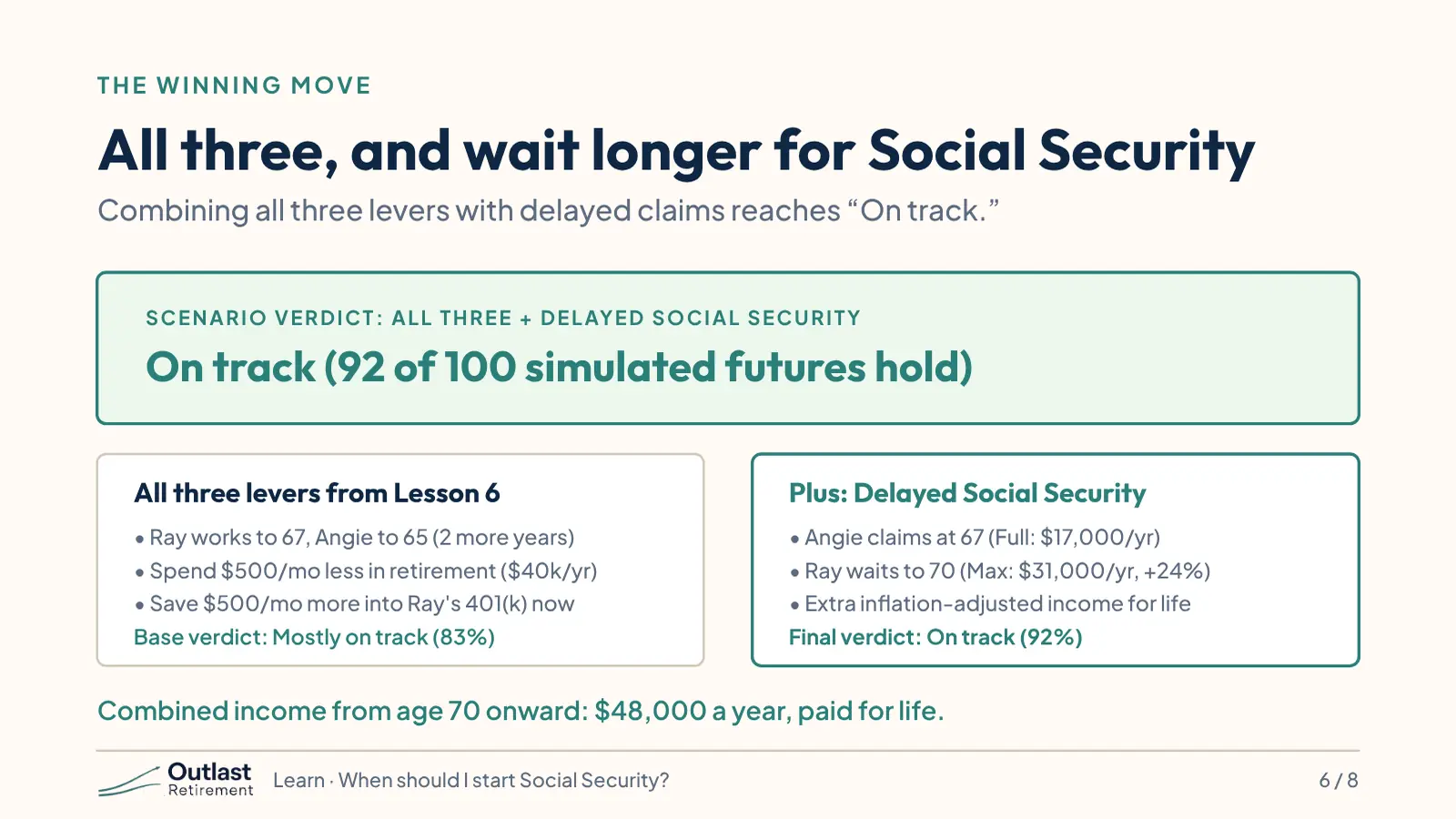
The answer combines all three levers from lesson six, working two more years each, Ray to sixty-seven and Angie to sixty-five, spending five hundred less, and saving five hundred more, with delayed Social Security. Angie claims her full benefit at sixty-seven, and Ray waits until seventy. Because Ray is the higher earner, his check jumps to thirty-one thousand dollars. That extra income pushes their plan all the way to on track, holding in ninety-two out of one hundred simulated futures.
7.Why waiting acts like longevity insurance
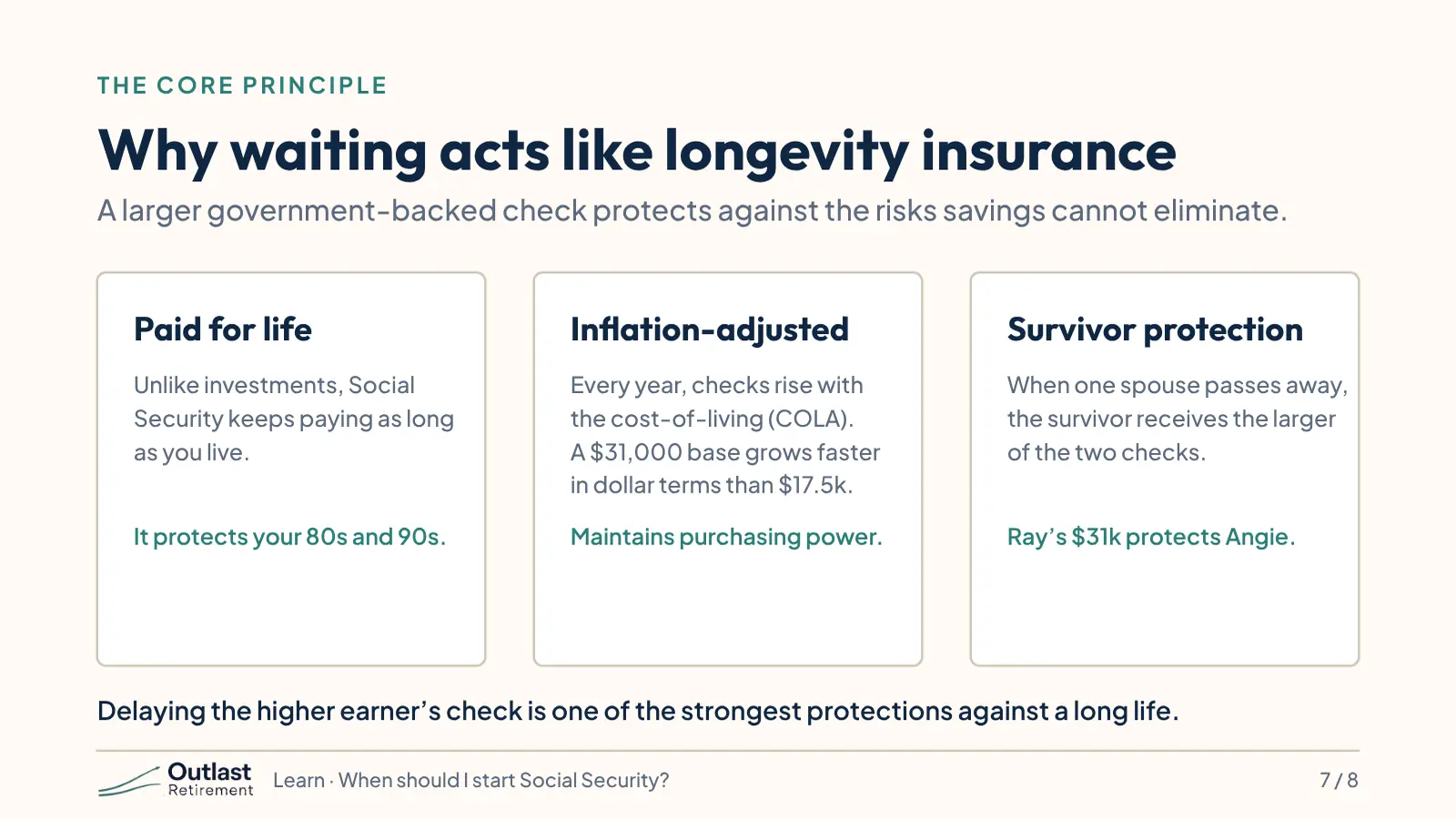
Why does waiting work so well? Social Security is retirement income that is paid for life, adjusted for inflation every year, and backed by federal law. And when one spouse passes away, the surviving spouse keeps the larger check. Delaying the higher earner’s benefit protects both of you into your eighties and nineties.
8.Your turn: test your claiming ages
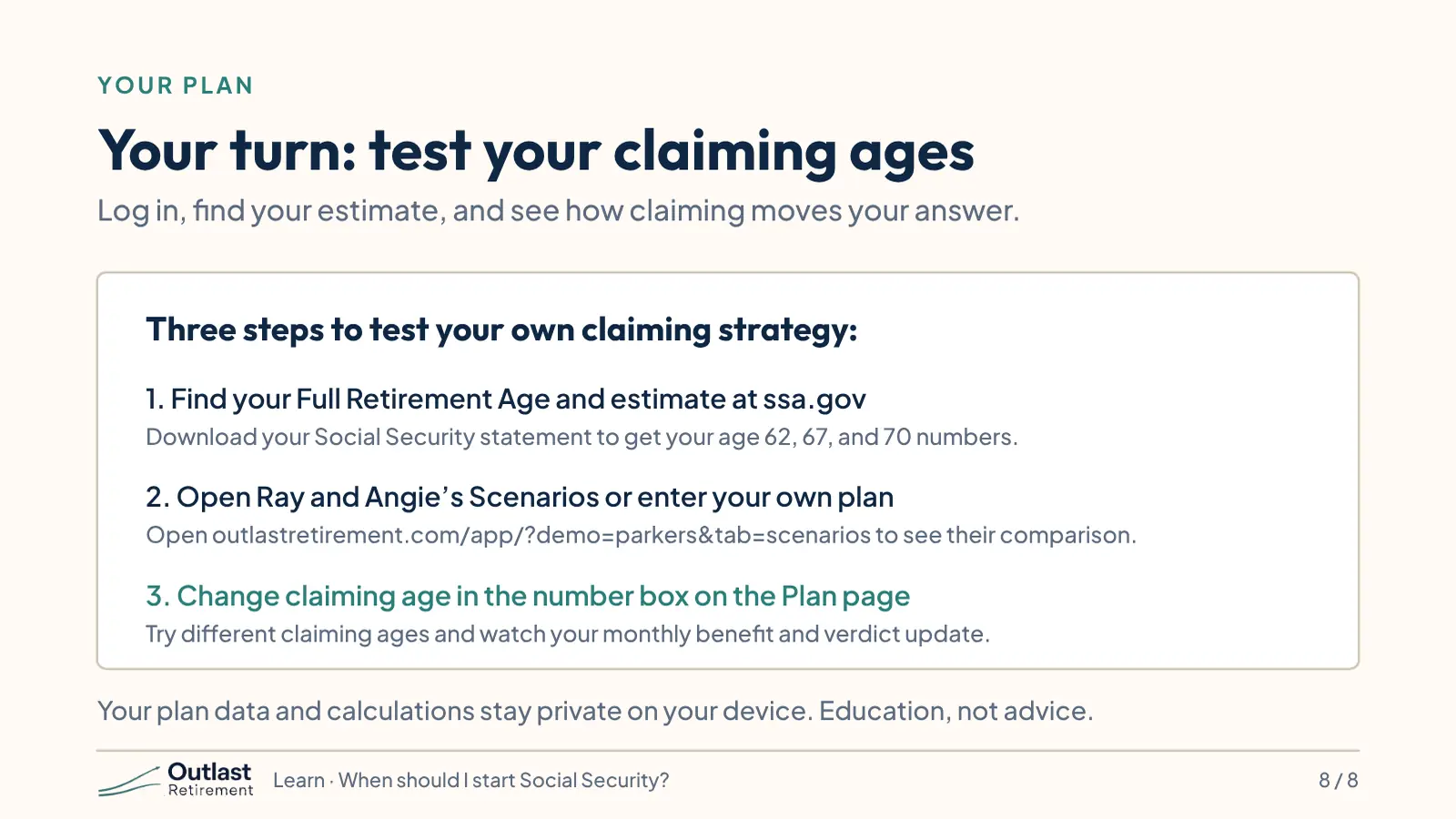
Now it is your turn. Log into Social Security’s website to find your full retirement age estimate. Then open your plan, or Ray and Angie’s demo, and change claiming age in the number box on the Plan page. See how much your check grows, and watch how it moves your verdict. Your plan data stays private on your device. This is education, not financial advice.
Try it
“Stop working at 62 instead” and “All three, and wait longer for Social Security” are saved there. Each spouse’s claiming age is a number box on the Plan page, under Household. Nothing you change there is saved, and it does not touch a plan of your own.
Open Ray and Angie’s Scenarios